Butternut Squash Baby Food Recipes
Updated Sept 08, 2023
Learn how to prepare butternut squash baby food for your little one…
This page is packed with ideas for everything from simple butternut squash puree to yummy, gourmet baby treats!
Butternut squash basics
Butternut squash is a type of winter squash, believed to originate in Mexico and now popular all over the world.
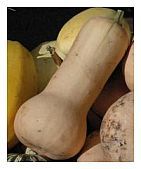
It looks like a huge pear (although you sometimes come across cylindrical ones!) and is often beige or yellow in colour.
It has a thick skin and a cavity containing seeds at the bulbous end.
Butternut squash (also known as butternut pumpkin in some parts of the world) tends to be around 8 to 12 inches long and between 3 and 4 inches wide.
On average, it weighs about 3lb – but you can sometimes find them as heavy as 5 lb!
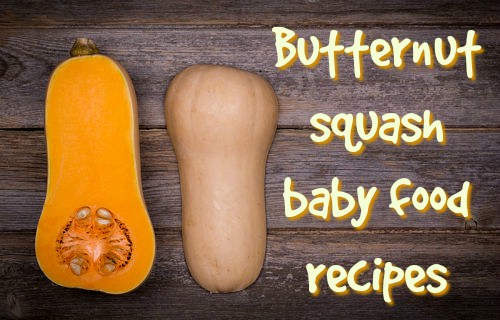
Cut open a butternut squash and you’ll discover its deep, orange flesh… cook the flesh and you’ll see why the butternut squash is one of the most popular winter squashes in the world!
It tastes delicious – rich and sweet, with a wonderful, velvety texture.
Some people compare its flavour to those of sweet potato and pumpkin – indeed, these ingredients are interchangeable in most recipes.
Buying and storing butternut squash
When choosing a butternut squash, look for one that’s heavy for its size.
Why?
Well, when harvested, butternut squash has a high moisture content.
But this slowly diminishes over time… along with flavour.
A heavy butternut squash will have retained most of its moisture and will be tastier as a result!
We also find that larger squashes tend to have a richer flavour than small ones.
Look for a butternut squash with a dull skin (not a glossy one), with no mouldy spots and very few blemishes.
There should be no green areas on the skin – and the skin itself should be tough.
If you can push your fingernail through it, then the squash is immature.
This means it will not be as sweet – or as tasty – as it should be.
Because its skin is so thick, butternut squash can be stored for quite some time in a cool, dark room with good ventilation – some sources suggest as long as 3-4 months.
Did you know?
Butternut squashes are related to cucumbers and melons! That’s probably why they work well in both savoury AND sweet dishes!
However, for the purposes of preparing baby food with optimal nutritional value and flavour, we suggest waiting to buy your butternut squash until you’re ready to use it!
Once cut, you should use butternut squash quickly.
It does not last long in the refrigerator (1 to 2 days at the most) – so it’s a good idea to cook the whole squash and freeze the leftovers in sealed freezer bags.
Thawed squash can be a little on the mushy side, though, making it perfect for dishes like soups, casseroles and – of course – purees!
How to cut and peel butternut squash
If you’ve ever hacked away at a butternut squash with an inadequate knife, you’ll know it’s not the easiest thing in the world to peel, or to cut.
So here are some tips to make it a little easier for you to prepare…
- To cut a butternut squash: take a good knife and make a shallow incision all the way down its length.
Insert the knife blade into the incision, then – using a rolling pin or a meat mallet – give the back of the blade a good whack!
With luck, the squash will separate into two pieces.
Use a spoon to remove the *seeds and the fibrous material. - Some people use a potato peeler to remove the skin from butternut squash.
If you have a particularly good peeler, you can give it a try – but we find this hard work! - Another option is to bring a large pot of water to the boil, then put the whole squash in it and simmer for 5-10 mins.
This softens the skin and makes it easier to remove (once cooled), but you may find that some of the flesh of the squash comes off with the skin. - Our favourite method (because it’s the easiest!) is to leave the skin ON when cooking butternut squash, then scrape out the flesh with a spoon afterwards.
Some people eat the skins, whereas other find them too tough (and we don’t recommend giving your baby the skin from butternut squash for this reason).
You can learn more about the pros and cons of peeling fruits and veggies for your baby here
*Can you eat butternut squash seeds?
The seeds of the butternut squash are edible and make a nutritious snack for older children and grown-ups!
Rinse them under warm, running water (this removes the ‘sliminess’ and the fibrous material), then blot them dry with a paper towel.
Toss them with a little olive oil, then spread them on a baking sheet and roast in a low oven until dry and crisp.
Sprinkle with a little salt if desired.
When can babies eat butternut squash?
Butternut squash is NOT a common allergen (it appears on Dr Sears’ list of ‘Least Allergenic Foods’) and is rarely the cause of any allergic reaction in babies.
It is also easy to digest.
Taking these qualities into consideration – along with butternut squash’s value as an excellent source of nutrition and its pleasing texture for the infant palate – you have a superb first weaning food for babies (ideally from 6 months of age, but from 4 months of age if recommended by your pediatrician).
When introducing butternut squash baby food to your little one, please use the four day rule.
This will help you identify potential allergic reactions, or digestive problems such as constipation or diarrhea.
nutritional information
The colour of a vegetable or fruit is often a good indication of its nutritive value – and the butternut squash is no exception!
Its deep orange hue tells you it’s packed with beta-carotene, which your baby’s body converts to vitamin A.
A lot of beta-carotene in baby’s diet can contribute to the harmless – but startling – ‘orange nose’ phenomenon!
Please see our sweet potato baby food recipes page for more information.
Butternut squash is also a good source of B vitamins, vitamin C, fibre, folate, manganese, magnesium and potassium.
Regularly consuming butternut squash is believed to reduce the risk of colon cancer in later life.
Plus, its vitamin C and beta-carotene content help reduce the effects of asthma.
How to cook butternut squash for your baby
Butternut squash is extremely versatile and can be cooked in a variety of ways.
- Baked whole.
Pre-heat your oven to 350 deg F (180 deg C) and place the squash on an ungreased baking sheet (alternatively, pop it in your slow cooker).
Pierce it all over with a fork (to allow the steam to escape – you do NOT want this exploding in your oven!) then bake for about an hour, until tender.
Halve lengthways, then scoop out the seeds and fibres. Spoon the flesh from the peel and it’s ready to eat or add to your recipes. - Baked halved.
Cut the squash in half lengthwise, remove all seeds and fibrous material, then brush the cut surface with olive oil.
Bake at 350 deg F (180 deg C) for around 30-40 mins, until tender. - Steamed.
Cut into cubes and then steam for around 8 to 10 mins, until tender. - Boiled.
Cut into cubes, just cover with water, then simmer gently unti cooked (8-10 mins).
Add the cooking water back into your recipe to make use of the nutrients that may have leached into it during the cooking time. - Barbecued/foil wrapped.
Place cubes of butternut squash on a piece of buttered foil, then bring the edges together to form a parcel.
Pop on the barbecue (or put in the oven) until tender.
For extra flavour, add a little cinnamon before you seal the parcels (and for a REALLY yummy treat, put some sliced apple in, too!)
How to make butternut squash puree for your baby
Making a butternut squash baby food puree is simple – just cook the squash using one of the methods described above, then mash it thoroughly with a fork or blitz it in a food processor.
Freeze leftover butternut squash puree according to the directions on our page all about How To Freeze Baby Food.
Do NOT thin butternut squash puree before you freeze it – it can be somewhat watery when thawed.
How to thicken baby food purees
Readers' Pics
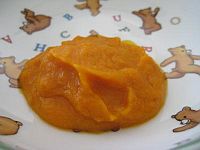
Butternut Squash Puree
This was the second solid food I gave to my baby (the first was banana) and he loved it!
Thanks!
Liivia – Estonia
Combination ideas using butternut squash baby food puree
Here are 8 delicious combinations you can put together for your baby once he has safely been introduced to butternut squash. Try mashing it with…
- cooked (or very ripe) pear – simply scrumptious!
- cooked apple
- grated cheese (a great way to boost baby’s calcium)
- cooked pumpkin
- cooked sweet potato
- ripe banana
- cooked carrots
- smooth, natural peanut butter
Butternut squash baby food recipes

Cheesy Creamy Squash (6 months+)
8 oz (1 cup) cooked butternut squash
1 oz (1/8 cup) cream cheese
1 tsp fresh *coriander (chopped)
*Please read more about introducing herbs, spices and garlic to your baby.
- Simply mash all the above ingredients together for a tasty puree that the rest of the family can enjoy as a side dish.
Fab and Fruity Squash (6 months+)
4 oz (1/2 cup) cooked butternut squash
1 oz (1/8 cup) dried apricots
1 oz (1/8 cup) raisins
1/2 ripe pear
pinch cinnamon (optional)
1 tbsp wheat germ
- Half an hour before you start, soak the apricots and raisins in warm water or apple juice to soften them.
- Peel and core the pear.
- Mash all the ingredients together or puree in a food processor.
- Top with the wheat germ.
Creamy Squash with Sage (6 months+)
8 oz (1 cup) butternut squash, peeled and cut into small chunks
2 fl oz (1/4 cup) cream
pinch dried sage
- Place the squash in a lightly greased oven-proof dish and bake at 350 deg F (180 deg C) for 15 mins.
- Remove from the oven, pour in the cream and add the sage.
- Return to the oven and bake for a further 15 mins.
- Mash well.
Easy Squash and Red Pepper Soup (6 months+)
1/2 butternut squash, cut into chunks (you can leave the skin on if you wish, but remove before pureeing)
2 medium red bell peppers
around 24 fl oz (3 cups) homemade chicken stock or vegetable stock
- Pre-heat the oven to 375 deg F (190 deg C).
- Remove the stem and seeds from the bell pepper and chop roughly.
- Place the pepper and squash into a baking tray and roast for around 1/2 hour, until the squash is tender.
- Blend until smooth in a food processor, then stir in enough stock to give the perfect consistency for your baby.
- Warm throughout.
Butternut Bows (6 months+)
4 oz (1/2 cup) pasta bows (or your baby’s favourite pasta shape, preferably whole grain)
4 oz (1/2 cup) roasted butternut squash
pinch nutmeg
pinch sage
unsweetened apple juice
- Cook the pasta according to the directions on the pack.
- Meanwhile, blend the squash with the nutmeg and sage, then add enough apple juice to give a ‘saucy’ consistency.
- Warm through and serve over the cooked pasta (chopped if necessary)
Baby’s Lentil and Butternut Squash Dhal
1/2 medium squash, baked then mashed
5 oz (5/8 cup) red lentils
small piece of peeled, fresh ginger (great for digestion)
pinch turmeric
pinch cinnamon
12 fl oz (1 1/2 cups) water
- In a saucepan, combine the lentils with the turmeric and cinnamon and pour in the water.
- Bring to the boil, then reduce the heat and simmer for 20-30 mins, until the lentils are nice and mushy and have absorbed the water.
- Stir in the mashed squash thoroughly… and serve!
Gourmet Butternut Squash Soup with Vanilla
This recipe – which tastes truly special – contains onion. If your baby has a delicate tummy, you may wish to wait until later in his first year to offer it to him.
8 oz (1 cup) butternut squash, peeled and cut into chunks
little olive oil
1/4 onion, chopped finely
pinch freshly ground black pepper
drop of pure vanilla extract
- Saute the onion in the oil until tender.
- Add the chunks of butternut squash and the freshly ground black pepper.
- Saute for 10 mins.
- Just cover with hot water and bring to the boil.
- Reduce the heat then simmer, covered, for 10 mins until the squash begins to soften.
- Add the vanilla extract and simmer for a further 5-10 mins.
- Blend in a food processor and serve… yum yum!
Squash and Chicken Dinner (7 months+)
2 oz (1/4 cup) cooked butternut squash
1 oz (1/8 cup) cooked chicken
2 tbsp cooked brown rice
1 tbsp grated cheese
- Simply puree or mash all the ingredients together, adding a little breast milk/formula to thin if necessary.
Butternut Squash ‘Ice Cream’
4 oz (1/2 cup) butternut squash puree (made from roasted butternut squash for sweetness)
drop of vanilla extract
- Stir the vanilla into the puree, then place in the freezer.
- Just as the squash is on the point of freezing, stir it thoroughly and serve!
Your little one will never know that this surprisingly delicious treat is contributing to his daily quota of veggies!
Readers' Pics

Mmm… Pureed Butternut Squash
This was the third food for my baby, after avocado and apples. I love the colour and the texture of it! And it’s so sweet. My baby loves it!
Ada – Bucharest, Romania
Finger Food Recipes
Butternut Squash Dice
- Simply cut a piece of cooked butternut squash into small dice and dust with nutmeg or cinnamon
Don’t try to dice the squash this small BEFORE you cook it, as it may well turn into mush and be difficult for your baby to pick up.
Butternut Squash Fries
- Cut fresh butternut squash into ‘sticks’ and toss with a little olive oil. Place on a baking sheet and bake at 350 deg F (180 deg C) until golden.
Magnificent Butternut Squash Muffins (10 months+)
These are a little different to ‘real’ muffins in that they are flat on top and nice and soft inside, making them easy for baby to chew or ‘gum’.
8 oz (1 cup) cooked butternut squash, mashed
2 oz (1 cup) whole wheat bread crumbs
2 oz (1/2 cup) grated cheese
2 tbsp olive oil
2 tbsp water
1 tbsp whole wheat flour
1 tsp baking powder
- Pre-heat the oven to 375 deg F (190 deg C).
- Mix all the ingredients together in a bowl, making sure they are thoroughly combined.
- Spoon into greased mini-muffin tins and bake for 20-25 mins.
Sources:
Butternut Squash - Nutritionix
From our blog…
Butternut Squash and Garbanzo Bean Curry
Butternut Squash and Apple Pierogies
Puree of Roasted Butternut Squash and Apple