Papaya Baby Food Recipes
Updated: June 26, 2023
When can baby eat papaya? Learn how and when to introduce papaya to baby here on our Papaya Baby Food Recipes page.
Papaya nutrition facts
The papaya is a highly nutritious tropical fruit that looks rather like an enormous pear!
There are two main varieties available – Hawaiian papayas, which are the most common and weigh around a pound each – and Mexican papayas, which are much bigger but have a less intense flavour.
In some parts of the world, the papaya is referred to as ‘paw paw’ – but, confusingly, a true paw paw is a different fruit altogether!
Papayas have a richly coloured orange or pinkish flesh.
That wonderful colour tells you straight away that they contain lots of beta-carotene and lycopene, both useful chemicals with anti-oxidant properties.
They’re also brimming with vitamin C, B vitamins and minerals… all powerful nutrients that help protect the body against serious conditions like heart disease and cancer.
In addition, papayas are revered worldwide for their anti-inflammatory properties (meaning they may be useful in reducing the symptoms of conditions like asthma).
They also help strengthen the immune system, making them a wonderfully natural way to protect your baby against colds and other infections.
Another interesting thing about papayas is their ability to aid digestion.
Papayas contain a substance called papain, which breaks down protein so effectively it is used commercially as a meat tenderizer.
This same substance is believed by many to help cleanse the digestive tract – and it may also help control the levels of acid in the stomach –
As we wrote here on our blog, some parents are discovering that papaya seems to reduce the severity of their babies’ reflux symptoms.
Papaya can also be useful in relieving constipation – but do take care, as too much papaya may have the opposite effect and lead to a bout of diarrhea.
NOTE: Giving your baby too much papaya can cause a temporary yelllowing of the skin, just like the discolouration that can occur in some babies who eat lots of sweet potato (see Carotenemia – A Review).
It’s a harmless condition and fades as baby begins to eat a wider variety of foods – but you should always consult your doctor if you have any concerns, or if the whites of your baby’s eyes appear yellow.

When can baby eat papaya?
With your doctor’s consent, you can introduce papaya to your baby from 6 months of age.
Whilst it’s not high on the list of potential allergens, there is a connection between latex allergy and allergy to papaya.
Therefore, if your baby is allergic to latex – or if there is a family history of latex allergy – you may choose to delay the introduction of papaya, as directed by your doctor.
Choosing papayas for your baby food recipes
HOW TO TELL IF A PAPAYA IS RIPE
Tip…
It’s quite usual for the skin of a papaya to have some black spots – but too many spots may be a sign that the fruit is deteriorating.
A papaya that’s ready to eat will have a texture that yields to gentle pressure and an orangey-red skin.
It will have a mild, sweet fragrance – but an overly-strong sweet fragrance can be an indication that the fruit is beginning to spoil.
If you’re looking for a papaya that you plan to use within a few days, choose one that has yellow patches on the skin – this means that it isn’t quite ripe, but will be soon.
You can speed up the ripening process by putting it in a paper bag with a ripe banana, in the same way as you’d ripen an avocado.
DON’T put the papaya in the fridge before it’s fully ripened, or the ripening process will stop!
Avoid buying papayas that are completely green and hard.
Papayas will only ripen off the plant after yellow patches have appeared.
A papaya picked whilst completely green will never become sweet and juicy and will only be suitable for cooking (some people like to use cooked green papaya as a substitute for winter squash).
How to prepare papaya for your baby
The flesh of a ripe papaya should be sweet and juicy with a buttery texture and a unique taste which many compare to cantaloupe (but which we feel doesn’t quite compare to any other fruit!).
Papaya does not need cooking and can be served just as it is – but if you have chosen to introduce it to your baby before 6 months of age, then you may choose to cook it to make it more easily digestible (see our page ‘Fruits and Vegetables for Baby – Do They HAVE To Be Cooked?’ for more information).
You can buy organic papaya if you prefer – however, the papaya is actually considered to be one of the least hazardous fruits in terms of pesticide residues, because the thick, inedible skin is removed before consumption.
That being said, non-organic papayas may harbour some traces of pesticide residues on their skins, so you should always give them a good wash before cutting them.
HOW TO CUT A PAPAYA
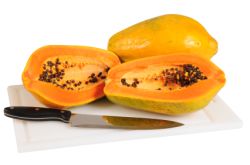
Simply slice the fruit in half lengthwise, then scoop out the seeds.
You can then use a spoon or melon baller to scoop out the flesh, which can be mashed or pureed and served to your little one.
Alternatively, peel the papaya with a sharp knife, then cut it in half, remove the seeds and dice the flesh for use in your baby food recipes.
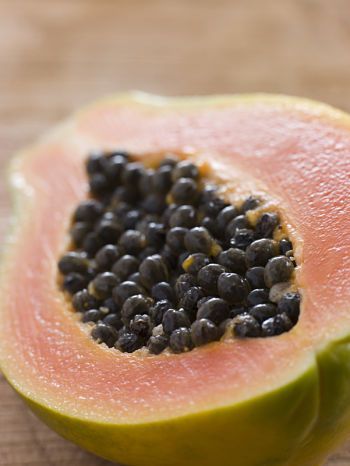
Can you eat papaya seeds?
Papaya seeds have a spicy/peppery quality to them and are completely edible.
Dry them, then crush them and use them like black pepper, or toss some whole seeds with salad for the grown-ups!
Papaya baby food ideas
- Stir finely diced papaya into cooked brown rice and serve as a side dish. That little extra sweetness will make the rice so much more desirable to baby!
- Mix pureed papaya with natural yogurt, mashed avocado and chopped, cooked chicken for a fun and fruity salad.
- Sprinkle half a papaya with ground ginger and rub with unsalted butter. Place in a baking pan, pour in 3/4 inch boiling water and bake at 400 deg F (200 deg C) for 20 to 30 mins. Try serving as a side dish with a savoury meal… weird but wonderful!
- Add sliced papaya to the poaching liquid for the last few minutes when cooking fish – papaya and fish make a delicious combination!
Papaya baby food recipes
Tropical Breakfast Treat (6 months+)
2 tbsp prepared oatmeal
1 tbsp pureed or diced papaya
1/2 small banana, sliced
- Blend or mash all the ingredients together for a nutritious – and sugar free! – start to the day.
Exotic Fruit Cocktail (6 months+)
2 tbsp natural yogurt
1 tbsp diced watermelon or cantaloupe
1 tbsp diced papaya
- Puree all ingredients together for a creamy dessert.
- As your baby moves on to texture, then try finely dicing the papaya and melon and simply stirring them into the yogurt.
Tip…
Don’t try making jelly with raw papaya because it contains enzymes that prevent gelatin from setting.
And if you’re planning on serving papaya with other fruits, add it just before serving, or the papaya will ‘tenderize’ the other fruits so much they’ll become mushy.
Cheesy Papaya I (6 months+)
pureed papaya
- Stir pureed papaya into cottage cheese – an irresistible combination that makes a great dip, spread, or even a topping for baked potato!
Cheesy Papaya II (6 months+)
1 tbsp pureed papaya
1 tsp cream cheese
1 tsp Ricotta cheese
2 tsp raisins
apple juice or water
pinch of cinnamon
- Soak the raisins in the apple juice or water to soften them.
- Place the softened raisins in a blender, with the papaya, cream cheese and Ricotta cheese.
- Puree until smooth, sprinkle with cinnamon and serve.
Tropical Tuna Salad (7 months+)
1/2 avocado, peeled, with stone removed
1 tbsp canned light tuna (packed in water) – read more about giving your baby tuna
1 tbsp diced papaya
- Mash the avocado with the papaya, then stir in the tuna.
- Serve just as it is, or as a tempting sandwich filling in whole grain bread.
Fruity Fiesta
This recipe contains strawberries. Strawberries sometimes trigger allergic reactions or rashes in baby (more information here) so you may wish to delay the introduction of this recipe until after baby’s first birthday.
1 tbsp natural yogurt
1 large, ripe stawberry, mashed
1 tbsp finely diced papaya
1 tsp wheat germ
- Stir the yogurt, strawberry and papaya together and top with the wheat germ.
Rainbow Dice
1 tbsp diced kiwi fruit
1 tbsp diced papaya
1 tbsp diced mango
1 to 2 tbsp wheat germ
- Mix all the fruits together in a bowl and toss with the wheat germ until well coated.
This makes a great finger food and – in addition to being nutritious – the wheat germ makes the dice easier to pick up.
Sources:
Homemade baby food equipment…
Homemade baby food accessories
Hand blenders for creating perfect purees for baby
Recommended baby food processors, mills and grinders