Apricot Baby Food Recipes
Amazing Apricot Baby Food Recipes and Their Benefits For Baby
Updated July 26, 2023
No matter whether they're fresh, canned, or dried, apricots are an excellent food for babies.
On this page we'll show you WHY they are such a valuable addition to your little one's diet and share with you some of our favourite recipes.
The health benefits of apricots
Apricots have a beautiful orange colour.
This tells you straight away that they are an excellent source of beta-carotene, which your baby’s body converts to vitamin A.
But that’s not all – apricots supply your baby with lots of vitamin C and fibre, plus many minerals including iron and potassium.
The high levels of antioxidants in apricots help protect the body against various cancers and heart disease – and their high fibre content makes them very effective against constipation.
Note: The laxative effect of apricots – particularly dried apricots – can be quite powerful.
If you give your baby apricots to relieve constipation, offer a little at first and gradually increase the amount until it does the trick.
Giving your baby too many apricots or apricot-based foods all in one go can trigger a nasty bout of diarrhea.
When can my baby eat apricots?
You can offer apricots to your baby – with your doctor’s consent – from 6 months of age.
If you choose to introduce solids before 6 months, then we’d recommend offering other fruits first and waiting until around the 6 month mark to introduce apricots.
This is mainly because of their laxative effect (see above), which does not make them an ideal first food for babies with an immature digestive system.
Apricot allergy
Whilst not terribly common, some individuals do react to apricots.
There are two types of apricot allergy.
One (with less severe symptoms) is associated with birch pollen allergy. People with this type of allergy can often eat cooked apricots, but not fresh.
The second type of allergy (with more severe symptoms) is associated with peach allergy. People with this type of allergy are usually unable to eat apricots in any form.
If your baby has already been diagnosed with an allergy to peaches or nectarines, then it’s more likely he’ll be allergic to apricots too.
You should, therefore, discuss the introduction of apricots with your child’s doctor.
Otherwise, be sure to introduce apricots following the four day rule .
That way, if there ARE any signs of allergic reaction, then you will be able to identify apricots as the cause.
Note: Dried apricots may trigger a reaction if your baby is sensitive to sulfites. Please see our notes about dried apricots (below) for more information.
Choosing apricots for your baby food recipes
Fresh apricots
If you can get them, truly fresh apricots are the best choice for baby.
Unfortunately, good ones are not always easy to find!
The problem is that apricots taste far better when they are ripened on the tree, but they are then very vulnerable to damage and don’t last long.
So they are often picked too early in order to be safely transported to market – resulting in fruit that doesn’t taste as good as it should.
If you can find apricots labelled as ‘tree-ripened’ – or locally grown apricots – then these will be the best tasting!
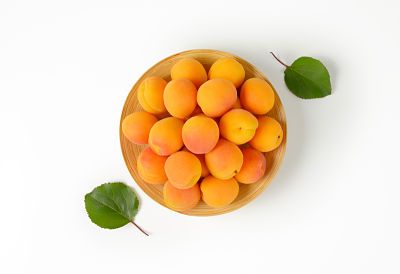
Fresh apricots should have a rich, orange colour.
A pink blush on one side is completely normal, but avoid apricots that are pale yellow in colour, or have any green patches.
The skin should feel velvety and the flesh should be quite plump and firm, with a gentle fragrance.
The taste is usually quite sweet, although some apricots can be a little on the tart side (so it’s a good idea to check before giving them to your baby, or you just might see what we call the ‘sour face!).
If you can only find unripe fresh apricots, then you can ripen them yourself at home at room temperature (NOT in the fridge).
To encourage them to ripen more quickly, place them in a paper bag with a banana.
Once the apricots are ripe, place them in the fridge immediately to stop them ripening any further.
Canned apricots
Canned apricots often taste better than fresh ones, simply because the fruit is allowed to ripen on the tree before it goes into the can!
Look for apricots canned in unsweetened fruit juice.
Apricots canned in syrup are not ideal, as they introduce unnecessary sugars into your baby’s diet.
Learn more about using canned fruits and vegetables in your baby food recipes
Dried apricots
Dried apricots are, perhaps, the easiest variety of the fruit to find!
Unfortunately, though, they are not quite as nutritious as fresh apricots and are their sugars are very concentrated.
They also tend to stick to baby’s teeth, so we don’t recommend offering them to your baby to eat ‘as they are’ (as a finger food, for example) on a regular basis.
That said, if you’re in an area where fresh or canned apricots are unavailable, then using them chopped or pureed in your baby food recipes does add some nutrients and a great flavour (we do so ourselves!).
Because of the stickiness we mentioned, they can be a pain to chop, so oil the blade of your knife before you start and you’ll find them much easier to work with.
If possible, buy organic dried apricots for your baby.
This is because non organic apricots are often treated with sulfur dioxide to preserve their bright colour.
Sulfites can cause reactions in sensitive individuals – particularly in babies with asthma.
Organic apricots – because they HAVEN’T been treated with sulfites – will look darker in colour.

How to prepare apricots for your baby
Do I need to peel apricots for my baby?
Apricot skin is entirely edible and you can leave it on the fruit if you choose.
However, there are certain situations where it may be preferable to peel apricots and other produce for your baby.
Please see our page – Should I peel Fruits and Vegetables For My Baby? – for more information.
If you DO choose to peel apricots for your baby, then the easiest way to do so is to plunge them briefly into boiling water, then into iced water.
This really helps loosen the skins.
Do I need to cook apricots for my baby?
Apricots are delicious just as they are and do not need to be cooked for babies 6 months and older.
However, you may choose to cook apricots for younger babies, to increase their digestibility or alter their texture.
Please see our page – Fruits and Vegetables for Baby… Do They HAVE To Be Cooked – for advice about whether or not it is always necessary to cook produce for your baby.
If you choose to cook apricots for your baby, then the easiest method is to steam them or simmer them in a very little water for a few minutes.
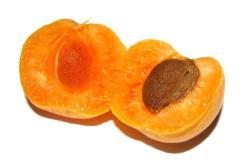
To remove the pit from a fresh apricot…
Simply run a sharp knife all the way around the natural ‘dimple’ of the fruit.
Then, just twist the two halves in opposite directions, separate them and remove the stone.
Apricot flesh discolours when exposed to the air…
To prevent this, place cut apricots in water to which you have added a little lemon juice if you are not planning on serving them right away.
To soften dried apricots…
Simmer for several minutes or soak them in warm water or apple juice (soak for at least half an hour).
To make apricot puree for your baby…
EITHER place fresh apricot pieces (steamed or raw) in a blender and process until smooth
OR
puree canned apricots in a food processor
OR
puree dried apricots in a food processor after using one of the techniques mentioned above to soften them.
Apricot baby food ideas
Apricots are drupes, closely related to nectarines and peaches.
In addition to our suggestions below, you can substitute apricots for peaches or nectarines in any recipe calling for them.
You can see our peach baby food recipes here
- Puree or mash apricots with rice cereal, oatmeal, peaches, banana, pineapple, applesauce or sweet potato.
- Stir pureed apricot into cottage or ricotta cheese… mmm!
- Mix pureed or finely diced apricots into natural or homemade yogurt, adding a little drop of vanilla if required.
- Stir finely diced apricots into cooked couscous and serve with a dollop of yogurt as dessert, or as a sweet side with a savoury dish.
- Poach apricots in water with a cinnamon stick.
- Add a pinch of ground ginger or nutmeg to apricot purees for a flavourful twist.
- Make an interesting dip or spread by combining pureed (or very finely chopped) apricots with cream cheese OR fill apricot halves with cream cheese, cut in half again, and serve as a finger food.
- When baby is older, use apricot puree in place of unhealthy fats and oils when baking – a popular trick that adds lots of flavour and reduces calories.
- Stir apricots into your stews for a touch of fruity flavour!
Apricot baby food recipes
Carrot and Apricot Puree (6 months+)
1 carrot, peeled and diced
1 fresh apricot (pitted) or 2 dried apricots, chopped
low sodium or homemade chicken broth
pinch ground cinnamon
- Put the diced carrot and apricot in a small saucepan and just cover with chicken broth.
- Simmer for approximately 5 minutes, until the carrot and apricot are tender.
- Remove the carrot and apricot from the saucepan with a slotted spoon, transfer to a food processor and add the cinnamon.
- Puree until smooth, adding a little of the reserved cooking liquid to thin if necessary.
Apricot, Banana and Rice Pudding (6 months+)
4 oz (1/2 cup) short grain white rice (pudding rice)
10 fl oz (1 1/4 cups) milk (can be made with formula or breast milk if desired)
3 fresh or 2 oz (1/4 cup) dried apricots
2 tbsp natural yogurt
pinch nutmeg
1 ripe banana, mashed
- Combine the rice and milk in a saucepan and add the nutmeg.
- Bring to the boil, then reduce the heat and simmer for around 20 to 30 mins, until the rice has absorbed the milk and is nice and soft.
- In the meantime, puree the fresh apricot (or soften first and puree if using dried).
- Stir the pureed apricot, yogurt and mashed banana into the cooked rice and serve.
- This is delicious served warm.
Apricot Custard
2 egg yolks, beaten
8 fl oz (1 cup) milk – breast milk, formula or whole milk
few drops vanilla extract
3 apricots, pureed
- Preheat oven to 350 degrees (180 deg C).
- Put the pureed apricot into the bottom of a small oven-proof dish.
- Mix the milk with the beaten egg yolks and the vanilla.
- Pour the mixture over the apricot puree.
- Place the dish in the centre of a baking pan, then pour water in the bottom of the baking pan until it comes around halfway up the side of your oven proof dish.
- Place in the oven and cook for 30 mins, until the custard has set.
- Cool, chill and serve.
- If this dish is a little too tart for your baby, mix the pureed apricots with mashed banana before pouring in the milk.
Refreshing Apricot Yogurt (6 months+)
1 small can of apricots
natural or homemade yogurt
banana
- Place the entire can of apricots in the freezer and leave until frozen.
- Remove from the can, cut into chunks and puree in a food processor.
- Swirl into natural yogurt and sweeten with mashed banana as required.
Vegetable and Apricot Curry (6 months+)
This recipe may contain a lot of ingredients, but it’s very easy to put together with a flavour that’s worth the effort!
olive oil
1/2 onion, chopped
1 garlic clove, crushed
1 bay leaf
1/2 tsp curry powder
1 small eggplant/aubergine, diced
1 small potato, peeled and diced
2 oz (1/4 cup) canned, chopped tomatoes with juice
2 apricots, pitted and roughly chopped
3 fl oz (1/3 cup) low sodium or homemade vegetable stock
2 tbsp sultanas
4 oz (1/2 cup) cooked chickpeas/garbanzo beans
pinch ground coriander
- Saute the onion with the garlic and bay leaf in a little olive oil, until the onions have softened.
- Stir in the curry powder and cook for a further 2 mins.
- Add the eggplant, potato, tomatoes, apricots and sultanas and stir well.
- Pour in the stock and bring to the boil.
- Reduce the heat and simmer for 20 mins.
- Stir in the chickpeas and warm through.
- Add the ground coriander, stir well, remove the bay leaf and serve with brown rice.
Fun and Fruity Finger Food (around 8 months+)
cooked whole wheat or tri-colour pasta shapes
fresh or canned apricot dice
cooked chicken, diced
cooked zucchini, diced
chopped, fresh parsley
- Mix all the ingredients together in a bowl and serve for baby to feed himself.
TIP: We sometimes puree some extra apricot and toss the pasta pieces in the puree before mixing them with the other ingredients. Our little man can’t eat them quickly enough!
Why not try…
Sources:
Homemade baby food equipment…
Homemade baby food accessories
Hand blenders for creating perfect purees for baby
Recommended baby food processors, mills and grinders