Peach Baby Food Recipes
Updated: July 02, 2023
Peaches make a wonderful food for babies.
With their natural sugar content, they’re deliciously sweet and can be used to create all sorts of dishes, from purees for beginners to healthy finger foods for more accomplished diners!
On this page, we’re going to take a closer look at this tasty fruit and share a few peachy recipes for your little one to try!
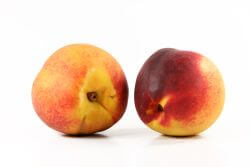
The first point to note is that peaches and nectarines are, essentially, the same thing!
Peaches have a soft, velvety skin and nectarines are smooth – the variation is caused by a genetic difference, rather like one person having fair hair and another dark!
Nectarines may sometimes be found growing on the branches of a peach tree and vice versa – and, in recipes, they’re completely interchangeable!
To keep things simple, we’ll carry on referring to ‘peaches’ in this article, but if you only have nectarines to hand, by all means feel free to go ahead and use those instead!
When can my baby eat peaches?
Peaches are very popular as a first food for babies and – with your doctor’s consent – may be introduced at 6 months of age (or from 4 months if recommended by your pediatrician – please see this page about introducing solids before 6 months of age).
Peaches are not considered to be highly allergenic – making them a good choice as a first food.
It’s worth bearing in mind, though, that an allergy to latex is associated with an increased risk of allergy to peach.
If there is a family history of latex allergy, then you need to carefully discuss the introduction of peach and other foods with your child’s doctor.
Nutrition facts
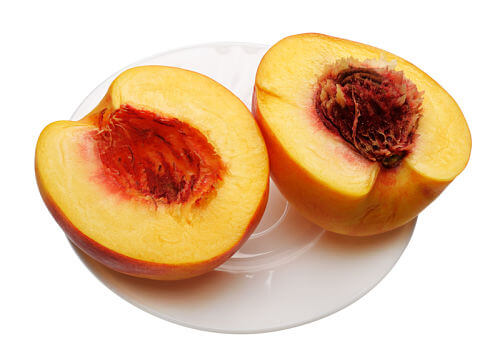
The flesh of peaches is usually a vibrant yellow/orange colour, although some varieties have flesh that’s almost white.
The more yellow/orange the flesh of the peach, the more beta-carotene it will contain.
Your baby’s body converts beta-carotene into vitamin A, which helps strengthen his immune system.
Rich in antioxidants, peaches also provide vitamin C, riboflavin, potassium and fibre.
Due to their fibre content, peaches are great for relieving constipation – by the same token, they should be avoided if your baby has a bout of diarrhea, as they will aggravate the situation.
Tips for choosing and storing peaches
You’ll probably hear peaches referred to as ‘clingstone’ or ‘freestone’.
These classifications refer to the stone inside – clingstones ‘cling’ to the flesh of the peach, freestones don’t!
As we mentioned earlier in this article, peaches may have white or yellow/orange flesh.
White fleshed peaches tend to be sweeter than their darker fleshed cousins, which may have a slight ‘tang’ to them.
We preferred to offer our little ones the ‘tang-ier’ variety because of their increased nutritional benefits – but if they were a little too tart for comfort we’d mix in a bit of mashed watermelon – it balanced out the flavour perfectly!
A ripe peach should have a pronounced ‘crease’ and a pleasant, peachy aroma.
Don’t assume that the redness (or ‘blush’) on the skin indicates that the peach is ripe – it has nothing to do with ripeness at all!
Instead, check the skin close to the stem – it should be a creamy yellow colour.
If it’s green, the peach will probably never ripen properly.
Peaches may be a little on the firm side when you buy them, but avoid them if they are rock hard.
To help soften a firm peach, put it into a paper bag – the ethylene gas it produces will speed the process along!
Ready-to-eat peaches can be stored in the fridge for a few days, although – of course – it’s always best to buy fruit and veggies for your baby as you need them.
Take care when storing peaches – they are very delicate!
This is particularly true of nectarines, because they don’t have that coating of fuzz to protect their skins.
Don’t pile peaches on top of each other and don’t store them on wire fridge shelves – this will cause bruising that will lead to rapid deterioration.
We recommend waiting until you are ready to use a peach before cutting it.
If fresh peaches are unavailable in your area...
Then frozen or canned peaches make perfectly acceptable alternatives (just make sure that the peaches are canned in fruit juice or water and not in syrup).
The type of peaches used for freezing or canning are usually the clingstone variety, because they tend to hold on to their flavour and texture far better.

How to prepare peaches for your baby
First, please review this page, which looks at the pros and cons of peeling fruits and vegetables for use in your baby food recipes.
Many parents choose to peel peaches because of the fuzziness of the skin, although it’s not absolutely essential.
If you are offering peach to your baby before the recommended age of 6 months, however, then we DO suggest that you peel the peach to make it more digestible.
To peel a peach for your baby…
Drop it in a pot of boiling water and leave it for 1 minute.
Then transfer it to a bowl of iced water (this will stop it from cooking).
The skin should then be easy to remove.
To make a peach puree for your baby…
Cut the flesh of the peach into small chunks and steam, or simmer in a very little water.
Mash well with a fork, or blend in a food processor.
If your baby is at least 6 months of age – and the peach is particularly ripe and juicy – you may wish to puree it uncooked.
We have more information about serving raw fruits and vegetables to your baby here
Peach baby food recipes and ideas
Here are some delicious and simple peach baby food ideas…
- Cut a ripe, peeled peach into cubes and dust with cinnamon – or roll in wheat germ – for a quick and easy finger food.
- Put peeled chunks of peach in the freezer and offer them to your little one to gnaw on when teething.
- Puree frozen peach chunks with banana for a refreshing dessert.
- Stir pureed peach – or soft peach cubes – into cooked rice cereal or oatmeal.
- Mash peach with cottage cheese to serve as a dip.
- Poach peach halves in apple juice.
- Mash peach with banana and a blob of coconut cream for a tropical treat!
Layered Peach Cream (6 months+)
2 tbsp natural yogurt (here’s how to make your own)
3 tbsp pureed peach
1 tsp wheat germ
- Mix the yogurt with 1 tbsp of the pureed peach.
- Put another tbsp of peach puree into baby’s serving bowl, add the yogurt, then top with the remaining peach puree.
- Sprinkle with wheat germ and serve as a nutritious dessert or colourful breakfast!
Peach and Nutmeg Surprise (6 months+)
1 peach, pureed
4 fl oz (1/2 cup) natural yogurt
1 drop pure vanilla essence
pinch powdered nutmeg
drop of maple syrup (optional)
- Simply combine all ingredients for a flavourful treat!
Gingered Peach (6 months+)
1 peach (cooked or uncooked), peeled and diced
tiny pinch ground ginger
breast milk/formula
- Puree the peach in a food processor with the ginger, then slowly add enough milk to give a creamy consistency.
NOTE: Do not freeze this dish if you used previously frozen breast milk.
Fruity Oatmeal Feast (6 months+)
1/2 peach, peeled and diced
1 medium apple, peeled, cored and diced
2 oz (1/2 cup) rolled oats
4 fl oz (1/2 cup) water
1 tbsp sultanas
4 fl oz (1/2 cup) natural yogurt
- Combine all ingredients (except the yogurt) in a small saucepan and simmer until the fruit is tender and the oats are cooked.
- Cool, then stir in the yogurt and serve.
Ricotta and Roasted Peach (6 months+)
1 peach
little lemon juice
drop of maple syrup (optional)
2 tbsp ricotta cheese
drop of pure vanilla essence
- Preheat the oven to 425 deg F (220 deg C).
- Cut the peach in half and remove the pit.
- Toss with maple syrup and lemon juice (omit the lemon juice if your baby is sensitive to citrus).
- Put the peach halves, cut side up, on a baking dish and cook for around 20 mins, until tender.
- Cool, then mash with the ricotta. Finally, stir in the vanilla.
Peachy Sweet Couscous (for babies enjoying texture)
1 tbsp prepared couscous (cooked in apple juice instead of water)
1 tbsp natural yogurt
2 tsp soft, diced peach (cooked or uncooked)
drop of pure vanilla essence
little pinch cinnamon
- Combine all ingredients, chill and serve!
Quick and Easy Peachy Chicken Dinner (7 months+)
1 boneless, skinless chicken breast
1/2 peach, peeled and cubed
1 small sweet potato, peeled and cubed
apple juice
little pinch of ground ginger
- Cut the chicken into small pieces and place all ingredients in a small saucepan.
- Just cover with apple juice and bring to the boil.
- Reduce the heat and simmer gently until all the ingredients are tender and the chicken is cooked through (add a little more apple juice if the mixture looks too dry)
- Puree or mash as desired.
Sources
Latex Allergy in Fruit Allergic Patients
Dr Sears – Most and Least Allergenic Foods
More Recipes and Tips...