Pear Baby Food Recipes, Guidelines and Ideas
Updated: Oct 04, 2023
Learn to prepare the perfect pear baby food dishes with our recipes, ideas and tips!
We think there’s nothing quite as luscious as a ripe, juicy pear… and babies everywhere agree!
Pear Baby Food Facts
There are so many varieties of pear available – and so many seasonal variations in their harvesting – that pears are available all year round in many parts of the world.
Anjou, Bosc, Bartlett and Comice pears are the most popular in the US – although Conference pears, with their interesting, russety skin, are gaining in favour.
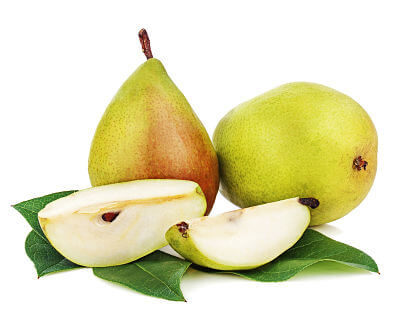
Pears come with a variety of skin colours – including yellow, green, brown and red – and usually lighten in colour as they ripen.
When fully ripe, pears should be sweet, juicy and almost buttery (with a slight ‘graininess’) in texture.
- Pears are a great source of vitamin C and copper (which protect the body’s cells from damage and support the immune system), vitamin K, potassium and fibre (which helps prevent constipation and keeps baby ‘going’ on a regular basis!).
- In later life, pears help lower cholesterol and protect the body against cancer.
- Pears are the least acidic of all fruits, making them an ideal first weaning food and a gentle fruit to start with for babies with infant reflux or GERD.
- Studies have shown that the consumption of pears helps guard against asthma.
So let’s get baby passionate about pears…
When can my baby eat pears?
According to leading health organizations around the world, babies do not need anything other than breast milk or formula for the first 6 months of life.
But if your pediatrician recommends introducing solid foods to your baby before 6 months, then pears are considered to be one of the safest foods to give as a first food.
Allergic reactions to pears are extremely rare (more about that later) – and their low acidity makes them gentle on tiny tummies!
Pears tend to keep stools loose – so avoid giving them to your baby if he is suffering from diarrhea.
Read more about choosing the best first food for baby
Choosing and storing the fruit for your pear baby food recipes
Did you know…
…That the pear is related to apple and quince – and is actually a member of the ROSE family?
Pears are picked before they are ripe.
If they are allowed to ripen on the tree, the sugars in the pear will turn to starch crystals, giving the fruit an unpleasant, gritty texture.
So the pears that you find in the supermarket tend to be very firm and are rarely ‘ready to eat’.
Choose pears for your baby that have a nice, smooth skin, with no bruises or little holes.
Some pears may have brown speckles on the skin – this is known as ‘russetting’ and – as long as it’s not excessive – doesn’t affect the flavour of the fruit in a negative way.
Once home, ripen your pears by placing them in a bowl at room temperature.
As the pears ripen, they will probably become lighter in colour.
When they are ready to eat, you should feel some ‘give’ when you press them with your fingertips.
Very firm pears can take up to 6 days to ripen fully.
To ripen pears faster…
Try putting a banana in the fruit bowl with them, or wrapping them in a brown paper bag.
DON’T refrigerate your pears until they are fully ripe, or they’ll never ripen!
But when they ARE ready to eat, putting them in the refrigerator will stop them from ripening any further.
And DON’T store pears alongside strong smelling foods, as pears tend to absorb odours.
Chinese Pears
Unlike other pears, Chinese (or Asian) pears ARE ripened on the tree, so they are ready to eat when you buy them (just like apples).
In fact, Chinese pears have the texture of apples, with a taste somewhere between the two!
They are rounder in shape, golden brown in colour on the outside and white on the inside.
Like other pears, they are low in acidity, although they are usually a little less sweet.
They tend not to discolour as much as other pears when cut.
Because of their firmer, crispier texture, we recommend that you treat Chinese pears in the same way as apples when giving them to your baby (cooking them gently to soften them, for example, if offering them as a finger food).
Do I need to cook pears for my baby?
On the whole, no.
Ripe, uncooked pears are soft and juicy enough to be easily pureed or mashed for babies of at least 6 months of age, or served as a manageable finger food for older babies.
They will retain all of their nutrients which may otherwise be lost, to some extent, during cooking.
However, cooking pears softens the fruit by breaking down the cell structures, making it a little easier to digest.
It also destroys one of the allergens that – rarely – causes reactions.
Therefore, we recommend cooking pears for babies UNDER 6 months of age, or if the pear itself is too firm to serve raw.
Find out more about whether or not to cook fruits and vegetables for baby
Did you know…
…That the antioxidant properties of pears are at their peak when the fruit is fully ripe.
Do I need to peel pears for my baby?
It is not essential to peel pears for older babies, although the skins should be removed for younger babies who may have difficulties in digesting them, or to whom they may pose a choking hazard.
Some parents prefer to peel pears due to textural reasons – there are woody cells just under the skin that can make pears seem a bit gritty.
On the other hand, many of the nutrients in the fruit are contained in the skin.
So it’s always good to encourage your little one to eat the entire fruit – peel and all! – at the appropriate stage.
Read more about the pros and cons of peeling fruits and veggies for your baby
Why organic pear baby food is best
If you wish to leave the skin on pears for your baby, then we recommend buying organic pears to minimize the risks from pesticides.
If you buy non-organic pears, then we recommend washing them thoroughly under running water, or – to be absolutely sure – peeling them.
Could my baby be allergic to pears?
Any food, of course, has the potential to cause an allergic reaction in a sensitive individual – but allergies to pears are very rare.
Nevertheless, you should still introduce pears to your baby with the consent of your doctor and using the four day rule.
That way, if pears DO cause an adverse reaction or digestive upset in your baby, you will easily be able to identify them as the culprit.
This link provides more information about pear allergy, which is often associated with birch pollen allergy or – more seriously – with an allergy to peach.
How to cook pears for baby
There are several simple ways in which pear baby food can be prepared if you choose to cook the fruit.
- Steam.
Peel the pear, remove the core and cut into chunks.
Place the prepared pear into the steamer basket and cook until tender. - Simmer.
Peel and core the pear, then place into a saucepan with enough water to just cover the chunks.
Simmer gently until tender.
Don’t boil until the mixture resembles a puree, as it will be too watery.
Soft chunks are fine! - Bake.
Peel and core the pear, cut into quarters and wrap in foil.
Bake until tender. - Microwave.
Peel and core the pear, then cut into slices.
Place in a microwave-safe dish and add a little water.
Cook on high until the pear is soft (times will vary depending on the power of your microwave).
Handy tip
To prevent cut pears from discolouring, dip them into a solution of 1 tbsp lemon juice in 8 fl oz (1 cup) water
How to puree pears for baby
Simply prepare the fruit using one of the methods described above, then place it in a food processor and blitz until smooth – or simply mash the cooked fruit thoroughly.
You can also puree pear by passing it through a sieve.
Remember – you may also puree or mash uncooked, ripe pears for babies of at least 6 months of age.
Can I freeze pear baby food?
Yes, although you’ll need to work quickly to avoid discolouration!
You can read more about how to freeze baby food here – and our Homemade Baby Food Accessories page includes some great storage solutions.
Thawed pear can seem a bit runny, as the water tends to separate.
A good stir is usually all that’s needed – but, for this reason, we don’t recommend thinning your pear baby food before freezing it.
How to thicken baby food purees
Pear baby food ideas
- Blend mashed/pureed pear with avocado or banana.
- Add pureed/mashed pear to baby’s rice cereal or oatmeal.
- Stir pear into cooked parsnip (it may sound strange, but actually tastes wonderful). Pear is also yummy mixed with butternut squash or sweet potato.
- Stir sweet, juicy pear into natural yogurt (here’s our recipe for homemade yogurt).
- Mix with cottage cheese – mmmm!
- Poach a peeled, cored pear in apple juice.
- Mix with a little pure, natural peanut butter.
- Serve soft, juicy wedges of pear as a finger food.
- Put chunks of ripe pear into a Teething Feeder and let your baby make his own puree!
- If you don’t like to give your baby chunks of pear at this stage, then try grating a ripe (but slightly firm) pear and allowing him to feed himself the slivers.
Top tip
Hunks of ripe pear can be slippery.
To help your baby get a grip, coat them in wheat germ or finely crushed cereal.
Alternatively, slice them with a crinkle cutter – those ridges really help!

Pear baby food recipes
Pear and Apple Puree (great for beginners)
1 ripe pear
1 apple
1 cinnamon stick (introduce your baby to pear WITHOUT cinnamon before including it in this recipe)
- Peel and core the apple and pear, then cut them into chunks.
- Place into a saucepan, just cover with water and add the cinnamon stick (if using).
- Simmer gently until tender, then remove the stick and mash/puree as desired.
Note: You may need to remove the pear before the apple as – depending on its ripeness – it may soften more quickly.
Baked Pear and Carrot Mash (a yummy first food)
1 carrot
1/2 ripe pear
- Peel the carrot and peel, then core, the pear.
- Cut the carrot into strips and the pear into chunks.
- Wrap the prepared carrot and pear in foil and seal, to make a parcel.
- Bake at 375 deg F (190 deg C) until tender.
- Mash well or puree.
Pear and Raisin Mash (6 months+)
1 large, ripe pear
1 oz (1/8 cup) raisins
a little unsalted butter, melted
1 fl oz (1/8 cup) apple juice
- First, soak the raisins in the apple juice until softened.
- Peel the pear, remove the core, then slice it.
- Arrange the slices on your grill (broiler) pan and brush with melted butter.
- Grill (broil) until tender, turning occasionally.
- Mash or puree the cooked pear with the softened raisins and apple juice.
Cinnamon Pear with Cream Cheese Topping (6 months+)
1 pear (peeled, cored, cut into chunks and placed in a small saucepan with enough apple juice
to cover)
1 cinnamon stick
1 oz (1/8 cup) cream cheese
drop of maple syrup
- Place the cinnamon stick in the saucepan with the pear and apple juice and simmer until the pear is tender.
- Remove the cinnamon stick, then mash or puree the pear.
- Combine the cream cheese with the maple syrup.
- Place the pear puree in your baby’s bowl and top with the cream cheese mixture (this dish is best served when the pear is still warm).
Pear and Butternut Squash Soup (6 months+)
1/2 small onion, peeled and chopped
8 fl oz (1 cup) homemade chicken stock
8oz (1 cup) butternut squash, cubed
1 medium pear, peeled, cored and cubed
2 oz (1/4 cup) celery, well chopped
4 fl oz (1/2 cup) milk
pinch chopped, fresh thyme
pinch oregano
little freshly ground black pepper
little olive oil
- Saute the onion in the oil over a medium heat until golden brown.
- Pour in the stock (broth), then add the squash, pears and celery.
- Bring to a rolling boil, then lower the heat.
- Simmer for 10 mins, then stir in the milk and seasonings.
- Check that the veggies are tender, then cool and serve, pureeing first if desired.
Pear and Quinoa Breakfast (great for babies enjoying texture)
Quinoa is a highly nutritious grain – and is a rich source of calcium.
Of all grains, quinoa has the highest protein content and also contains phosphorus (important for a healthy heart, kidneys and brain), vitamins B and E and iron.
Find out more about quinoa here
2 oz (1/4 cup) quinoa
4 oz (1/2 cup) apple juice
1 oz (1/8 cup) sultanas
pinch nutmeg
1 small, sweet pear
- Peel, core and dice the pear.
- Rinse the quinoa, then place in a small saucepan.
- Add the water, nutmeg and sultanas.
- Bring to a boil, then lower the heat, cover and simmer for 5 mins.
- Add the diced pear, then continue to simmer until all the water has been absorbed by the quinoa.
Finger foods
Pear-y Special Quesadillas (for babies comfortably biting and chewing)
1 whole wheat tortilla
1 small pear, peeled and cored
2 tbsp mozzarella or other mild cheese
- Bake the pear, wrapped in foil, until soft.
- Cool and mash.
- Spread the soft pear over half the tortilla, then sprinkle the cheese over the top.
- Fold the tortilla over into a semi-circle, then place it on a warmed skillet (frying pan).
- Heat for a couple of minutes on each side, until the cheese has melted, then cut into wedges and serve when cooled to a safe temperature.
Pear and Banana Muffins (sugar free – ideal from around 12 months+)
2 oz (1/2 cup) self raising flour (or all-purpose plus 3/4 tsp baking powder)
1 egg
1 ripe banana (this provides the sweetness to the muffins, so it is important the banana is ripe)
1 ripe pear
2 fl oz (1/4 cup) olive oil
good pinch cinnamon
1 tbsp milk
- Preheat the oven to 375 deg F (190 deg C).
- Peel and core the pear, then chop finely.
- Mash the banana.
- Whisk the oil and egg together in a bowl until thoroughly combined.
- Add the cinnamon to the flour, then stir in the chopped pear.
- Gently blend the banana and the oil mixture with the flour, then add the milk.
- Grease a muffin tray, then spoon in the mixture.
- Bake for around 20 mins, until golden and firm.
Please note that this recipe produces muffins that are deliciously dense and moist rather than fluffy and light.
Discover more ideas for baby’s menu…