Mango Baby Food Recipes Tips and Ideas
Updated: July 10, 2023
Our mango baby food recipes are quick, tasty and nutritious! Learn all you need to know about preparing homemade mango baby food for your little one.
Mango nutrition facts
Mango is one of our favourite fruits, because it doesn’t just taste wonderful – it’s bursting with nutrients, too!
Mangos are a great source of…
- vitamin C
- vitamin E
- vitamin K
- vitamin B6
- potassium
- copper
- fibre
- beta-carotene
The high beta-carotene content of mango – evident in its vibrant orange flesh – is converted by your baby’s body to vitamin A.
Rich in anti-oxidants, mango helps boost the immune system and can play a role in preventing serious diseases like cancer and heart disease.
Help baby absorb more iron…
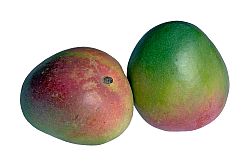
Mangoes – and other foods high in vitamin C – help your baby absorb more iron from the foods he eats.
That means that it’s a good idea to serve mango with meat dishes, or with other iron-rich foods.
This is a natural way to boost your little one’s iron intake and make sure that his iron levels are sufficient to meet his needs.
Mango allergy
Mango is not considered to be one of the top allergenic foods – yet!
However, it seems that experts feel the number of people allergic to mango will rise as the fruit becomes more popular in parts of the world where it was previously not available.
For this rerason it is currently classified as an ’emerging allergen’.
Mango allergy is usually a reaction to the sap of the mango tree or to the skin itself.
Allergy to the flesh of the mango is less common.
This is because the skin contains a chemical called ‘urushiol’ – the same chemical that’s found in poison ivy and sumac, both well known for their potential to cause a nasty reaction on contact.
The symptoms of mango allergy are varied, including redness, itching or flaking around the mouth, swelling of the face, throat or tongue (sometimes serious), runny nose, wheezing, vomiting and abdominal cramps.
You should – of course – always contact your doctor if you think your child is experiencing an allergic reaction to mango, or any other food.
When can my baby eat mango?
Your baby should not usually be given anything other than breast milk or formula for the first 6 months of life (see our guide to introducing solids for more information).
You may then wish to discuss with your doctor the best time for introducing mango to your baby, particularly if there is any family history of allergy.
Some parents choose to wait to introduce mango to their babies towards the end of their first year, or at least wait until their little ones have been safely introduced to a variety of other fruits and veggies.
We don’t recommend mango as a first food for baby for several reasons…
- the risk of allergic reaction is higher than with some other fruits, such as apple or banana, which are more ‘baby friendly’!
- mango’s high fibre content may cause diarrhea if your baby’s digestive system is still a little too immature to cope with it.
- some parents have found that mango may trigger a diaper rash (nappy rash).
When you do decide to offer mango to your baby for the first time, remember to serve it separately, following the four day rule.
This will help you judge if it causes any problems for your little one.
Choosing and storing mango for your baby
There are lots of different types of mangos available worldwide and they tend to vary in appearance AND taste.
Some lower quality mangos can be really fibrous (almost hairy!) inside – and some have a peculiar chemical taste (these are referred to as ‘turpentine mangos’).
Underripe mangos, too, can be very acrid.
But if that’s been YOUR experience with mangos up to now, don’t be deterred from this tropical treasure – you may find another variety far more to your taste (and your baby’s!).
Mango.org offers a helpful guide to the many varieties of mango available.
However, OUR favourites – and those of our little ones – are
- Alphonso
- Ataulfo
- Kensington Pride
We recommend them if you can get them – we think they have the best taste AND texture!
Choose a ripe mango to use on the day of purchase or a slightly underripe one to use a few days later.
How to tell if a mango is ripe…
You can’t tell if a mango is ripe by looking at it – some varieties still look green, even when they’re ready to eat.
And others may have lovely red patches, but still be underripe!
Instead..
- Smell the mango – it should have a sweet and aromatic fragrance at the stem end.
If there is no scent, it’s underripe – if it has that kerosene/turpentine smell, avoid it, because it will probably have a chemical flavour, too! - Squeeze the mango to test for firmness, in the same way you’d test a peach.
If it gives a little to pressure, then it’s ripe.
DON’T put unripe mangoes in the fridge – they’ll never ripen! Instead, pop them in a paper bag, which will speed up the process.
Once your mangoes ARE ripe, you can store them in the refrigerator for 4-5 days – or peel and dice them, then freeze them for up to 6 months (although we suggest using them within one month for baby food).
No fresh mango available in your area?
Learn more about using canned fruits and veggies in your baby food recipes.
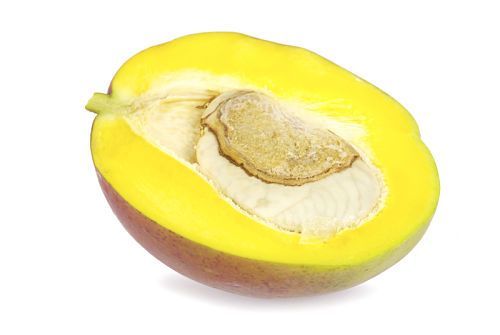

How to prepare a mango
Mangos are not the easiest things to prepare for eating! The flattish stone inside makes them difficult to cut as efficiently as you might like – and they’re so juicy they make quite a mess!
There are a few different ways to peel and cut a mango…
- Our favourite (but maybe more unusual) technique is to peel the mango with a Soft Skin Peeler, THEN to cut the flesh away from the pit
- You could also try using an OXO Good Grips Mango Splitter, which is a neat solution to a common problem!
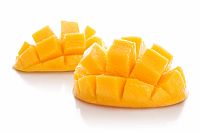
- OR – you can simply cut off the fatter sections of the mango (known as the cheeks) by cutting parallel to the flat seed, THEN cut off the remaining sections, THEN scoop out the flesh with a spoon.
Another popular technique is to score the mango with a sharp knife in a ‘checker-board’ pattern (as shown on the right), then turn the skin inside out to push up the cubes, which may be removed with a sharp knife.
Cooking mango – is it necessary?
In general, no – mango is perfectly digestible and delicious served to your baby just as it is.
However, we have a page devoted to helping you decide whether or not to cook fresh produce for your baby here – Fruits and vegetables for baby – do they have to be cooked?
Mmmm is for mango! Try these homemade mango baby food recipes and ideas!
Mango puree (made by whizzing diced mango in the blender until smooth) is great served with pureed, mashed or chopped…
It also adds a healthy, tropical twist to veggie purees – ideal if your baby won’t eat vegetables!
And it’s wonderful finely chopped and stirred into brown rice, along with a pinch of turmeric!
Here are some more mango baby food recipes…
Mango Cream
6 fl oz (3/4 cup) natural yogurt (here’s how to make your own)
1 mango, peeled and pitted
drop of vanilla extract
1 tbsp wheat germ
- Divide the mango flesh into two portions.
- Chop one portion very finely. Put the second portion into your food processor and blend until smooth.
- Stir the finely chopped mango AND the pureed mango into the yogurt, along with the vanilla extract.
- Serve, topped with a sprinkle of healthy wheat germ.
Mango and Sweet Potato Surprise
1 medium, cooked sweet potato
1 mango, peeled and pitted
pinch cinnamon
1 tbsp coconut milk (optional)
- Mash the cooked sweet potato.
- Either puree or finely chop the mango and stir into the sweet potato, along with a good pinch of cinnamon.
- At this point, we like to add coconut milk (read more about using coconut in your baby food recipes) – it gives a wonderful flavour! But it’s not essential if you don’t have any to hand.
- Serve warm or cold.
Mango and Tofu Dream
Read more here about introducing tofu to your baby
4 oz (1/2 cup) silken tofu
1 mango, peeled and pitted
drop vanilla extract
pinch ground ginger
4 fl oz (1/2 cup) natural yogurt
- Simply blend all ingredients in a food processor until smooth. Serve chilled.
Mango Ice Cream Recipe – (dairy and sugar free)
1/2 mango, peeled and pitted
1 small banana
1 large strawberry (you may wish to omit the strawberry if your baby is under 12 months of age – more information here)
1 lb silken tofu
- Blend all the ingredients thoroughly in a food prcoessor, then transfer to the freezer.
Mango Chicken Recipe (for babies enjoying texture)
1 cooked, boneless, skinless chicken breast, chopped
1 mango, peeled and pitted
2 fl oz (1/4 cup) chicken stock (here’s how to make your own)
4 fl oz (1/2 cup) natural yogurt
1/2 tsp turmeric
- Dice the mango flesh, then puree in a food processor with the chicken stock, yogurt and turmeric.
- Pour into a small saucepan and warm, gently.
- Pour over the chopped chicken, mix well and serve with brown rice or cous cous.
Sources:
National Mango Board – Nutrition
The role of vitamin C in iron absorption
CDC – Iron and Iron Deficiency
Homemade baby food equipment…
Homemade baby food accessories
Hand blenders for creating perfect purees for baby
Recommended baby food processors, mills and grinders