Whole Milk and Fats For Baby
Updated May 18, 2023
You often hear that you should not restrict the amount of fats in your baby’s diet and should give him whole milk – yet for adults, the recommendations are quite the opposite!
So why is fat so important in your baby’s diet?
PLEASE NOTE: The information presented here is meant as a guide and does not replace professional medical advice. You should always discuss your baby’s dietary requirements with your doctor.
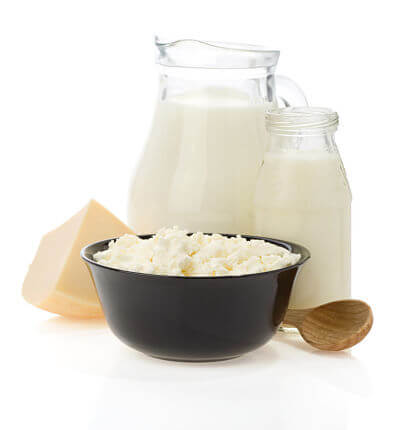

From the time your baby starts solids until his second birthday, experts recommend that you give him only full-fat or whole milk versions of foods such as cheese, yogurt and fromage frais.
This is because your baby grows very rapidly during this period.
On average, babies actually triple their birth weight and grow an amazing 10 inches in length by their first birthday!
In order to support this tremendous rate of growth, babies need lots of calories. They get these calories from fat.
Fats are also essential for the development of your baby’s brain – after all, 60% of the brain and the sheaths surrounding the nerves are actually composed of fat!
Clearly, the nutritional needs of an infant are quite different to those of an adult – making the low-fat and low-cholesterol diets recommended for adults often unsuitable for children under 2 years of age.
TIP: Did you know that the lactic acid in yogurt actually aids calcium absorption? That means that your baby will absorb more calcium from yogurt than he would from the same volume of milk!
Remember – babies have tiny stomachs.
In order for their nutritional requirements to be met, the foods you give them need to be “calorie rich” – meaning that they must supply enough calories within a small volume of food.
Initially, your baby’s fat requirements are met by either breast milk or formula.
But once you have introduced him to solid foods, then it is important that any dairy products you give him are made with whole milk.
These will provide the extra fats that his body needs, as well as supplying additional calcium.
More calcium sources and advice about your baby’s calcium requirements
Update:
These rules have been amended somewhat in recent years and some pediatricians are now recommending 2% (reduced fat ) milk for babies between 12 months and 2 years of age who are overweight, at risk of becoming overweight, or with a history of high cholesterol.
This recommendation appears as part of the New AAP Policy on Lipid Screening and Heart Health in Children which reads:
“…The statement also recommends the use of reduced-fat dairy products, such as two percent milk, for children as young as one year of age for whom overweight or obesity is a concern.”
You should, therefore, seek specific advice from your doctor about whether or not to introduce whole milk and whole milk products to your baby.
When should my baby drink cow’s milk?
Don’t give your baby cow’s milk as a main drink before his first birthday.
This is because it is too low in iron to meet your baby’s needs.
Sometimes, the protein in cow’s milk can trigger an allergic reaction – please see our Milk Allergy In Baby page for more information.
Once your baby is one year of age, you can give him cow’s milk as a main drink (source: CDC).
Whilst many pediatricians in the UK recommend continuing with full-fat milk until your child is 5 years of age, the American Academy of Pediatrics recommends switching to a reduced fat variety when your child reaches the age of 2 (or earlier if necessary, as detailed in the ‘update’ above).
Why at age 2?
Because – in the long term – lower fat milk is a healthier option.
If you wait too long past your child’s second birthday, you may find that he has become so accustomed to the flavour and richness of whole milk that he might be unwilling to make the change!
More Recipes and Tips...
Avocado baby food ideas – Learn more about how to make this important source of health-promoting fats a part of your baby’s diet.
How to make your own whole milk yogurt