Making Baby Food With Canned Vegetables And Fruits
Canned (or tinned) vegetables and fruits may be more readily available than fresh – but are they an acceptable alternative for use in your baby food recipes?
Traditionally, canned produce has had a bad reputation, considered to be high in salt or sugar, nutritionally inadequate and mushy in texture.
But before you dismiss canned food entirely, there are a few positive aspects that might be worth considering!
What happens to fruits and vegetables during the canning process?
Most canning plants are situated near to vegetable and fruit production areas. The advantage to this is that little time passes between the harvesting of produce and the start of the canning process.
As we discuss in our article about Making Baby Food With Frozen Vegetables and Fruits, the time between picking the produce and processing it is very relevant to its nutritional value.
Fruits and veggies canned or frozen within hours of being picked will, nutritionally speaking, be at peak condition at the start of processing.
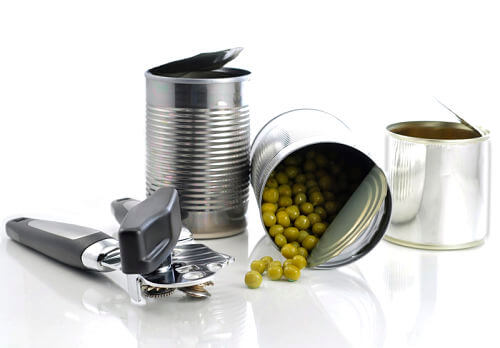
Once the produce reaches the canning plant, it is peeled if necessary, then machine-packed into cans.
The cans are then filled to a pre-determined level with the canning liquid (usually water, brine, syrup or juice) and preheated before they are sealed.
Finally, the sealed cans are heated to various temperatures (depending on the type of produce) and for varying lengths of time. This destroys any pathogens that may lead to food poisoning or organisms that may cause the food to spoil, ensuring that the produce can be stored for long periods of time without refrigeration.
How does the canning process affect the nutrients in fruits and vegetables?
There is no doubt that the cooking of produce involved in the canning process leads to nutrient loss in fruits and veggies.
But the extent of the nutrient loss is a hotly debated topic.
A 1997 study carried out by the University of Illinois Department of Food Science and Human Nutrition and a more recent UC Davis Study Published in the Journal of the Science of Food and Agriculture found the nutritive quality of canned produce to be comparable to that of fresh and frozen fruits and vegetables.
Both studies were funded by the Canned Food Alliance, a part of the canning industry (which, of course, may make one a little skeptical of the results).
However, the findings did seem to suggest that, although some vitamin loss occurs during the canning process, there may be some positives to consuming canned produce. This is a view supported by the American Institute for Cancer Research.
The University of Illinois report stated that:
- The fibre content of fruits and veggies is unaffected by the canning process. In fact, the heating process seems to make the fibre more soluble, helping the body use it more effectively.
- The vitamin A levels in canned produce are similar to those of fresh or frozen fruits and vegetables. Researchers also found that the vitamin A levels in some vegetables were higher (pumpkin, for example).
- An important carotenoid (antioxidant) – lycopene – is more useful to the body after it is heated or canned. Tomatoes contain lycopene, which is why many experts suggest that canned tomatoes may actually be MORE nutritious than fresh (learn more about using tomatoes in your baby food recipes here).
- Although some loss of vitamin C occurs during the heat treatment of fruits and vegetables, the vitamin C levels of the produce AFTER canning remains consistent (in other words, no further loss of vitamin C occurs) over a 1-2 year period. Fresh produce, on the other hand, DOES decline in nutritional quality with time.
Other advantages of making baby food with canned vegetables and fruits
- They are convenient (the peeling, chopping – even the cooking – has been done for you!).
- They enable your baby to experience a wider range of fruits/vegetables than may otherwise be available either fresh, frozen or in season.
- Because the fruits and vegetables have been washed, peeled and processed, pesticide residues are greatly reduced as compared to non-organic produce. Whereas fresh, non-organic fruits and vegetables often receive further pesticide treatment AFTER harvest, this is rarely the case with produce destined for the canning plant. This is because the time between harvesting and processing is so short.
- Canned produce is often cheaper than fresh.
So what are the disadvantages of using canned fruits and veggies in your baby food recipes?
Canned food suddenly sounds a lot more healthy, doesn’t it?
But before you go filling your shopping cart with lots of steel-clad produce, there ARE some negatives to consider, too!
- Canned vegetables are often high in sodium. This helps preserve them and is used as a flavouring (sadly, many consumers find unsalted vegetables too bland!). Some experts recommend rinsing canned vegetables to remove the sodium – but this only removes about 40% (merely draining the produce is even worse, of course, and removes only a third of the sodium). Rinsing the veggies washes away many water soluble vitamins, too.
- Some manufacturers use the chemical BPA in the lining of their cans. BPA has been found to have harmful effects on the body and many countries have already banned its use in the manufacture of baby bottles. There is a possibility that the BPA in the lining of cans may leach into the foods themselves and recent research published by the Journal of the American Medical Association showed that BPA levels in the body may then be high as a result.
- Canned fruit is often packed in sugary, heavy syrup.
- Canned produce is undeniably ‘squashy’ in texture. On the whole, it does not allow your baby to experience the true texture of fresh fruits and vegetables.
- Many of the nutrients retained by canned produce end up leaching into the canning liquid.
- Some canned produce (tomatoes in particular) may contain bits of peel and core. This is less common in more expensive, well known brands – but it does make it important to check the contents very carefully before serving them to your baby.
- Canned fruits and vegetables may not be suitable for babies with G6PD Deficiency – please see this page for more information.
Tips for buying, storing and cooking canned vegetables and fruits for your baby
If you do choose to use some canned produce in your baby’s menu, here are some tips to ensure the foods you prepare are as nutritious as possible…
- Check labels thoroughly. Look for salt (sodium) free vegetables, which are becoming more widely available as consumer demand grows. Some brands even make organic, canned produce. Choose fruits packed in their own juice – not syrup. Even canned vegetables may contain sugar – ensure yours are sugar free. Check, too, for other additives/preservatives.
- Determine whether or not the lining of cans you are buying contains BPA. The best way to do this is to contact the manufacturers directly – well worth doing, as you can then make a point of seeking out only their products. You may also like to refer this article from Treehugger, which contains a list of 7 Companies You Can Trust to Use BPA-Free Cans.
- Avoid vegetables canned in sauces. These will usually contain salt.
- Make sure that the cans you buy aren’t bulging, leaking or badly dented. The contents will likely be spoiled and could be very dangerous to consume.
- Make sure that veggies/fruits in glass jars are tightly sealed with no sign of tampering.
- Unopened cans should be stored in a cool place, with temperatures not exceeding 75 deg F. Rotate the cans on your shelves (putting new ones behind the old) to ensure you are storing them for the least time possible.
- Once you’ve opened a can, put any unused fruits/veggies into a suitable container and refrigerate immediately for a maximum of two days.
- Canned vegetables have already been cooked – they do not need cooking again, as this will cause further nutrient loss. Instead, they should be gently warmed to serving temperature, then immediately removed from the heat.
- Warm vegetables in their canning liquid, to make the most of any nutrients that may have leached into the liquid during storage. Use excess canning liquids in soups, stews etc instead of water, to further utilise these nutrients.
To sum up…
Truly fresh fruits and vegetables are the best choice for your baby. Absolutely fresh produce cannot be beaten for its nutritive qualities, its texture and – of course – its taste.
But when fresh produce is simply not available, frozen – and THEN canned – fruits and veggies would make acceptable alternatives in your baby food recipes… as long as the guidelines above are carefully followed.
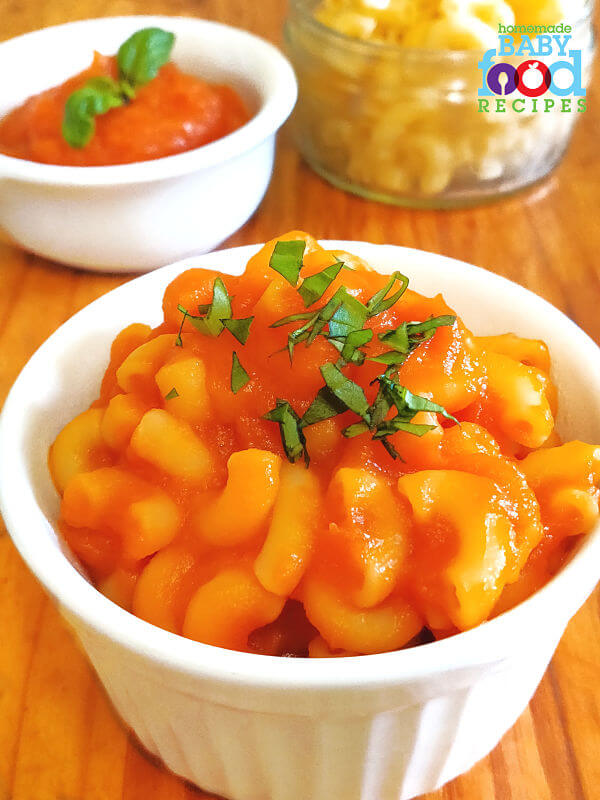
create a healthy sauce for pasta…

More helpful baby food articles…
Making baby food with frozen vegetables and fruits
Should I peel fruits and vegetables for my baby?
May I serve raw fruits and vegetables to baby – or must they be cooked?