Kiwi Baby Food Recipes
Updated: July 13th, 2023
On our kiwi baby food recipes page, we’re going to take a closer look at this fantastic fruit and show you just how to include it in your baby’s diet!
One of our children once described a kiwi fruit as a ‘hairy green egg’… but, despite it’s rather rugged appearance, this fuzzy little fruit is just brimming with vitamin C and makes a mouthwatering addition to your baby food repertoire.
Kiwi fruit facts
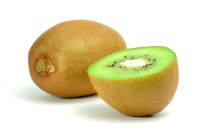
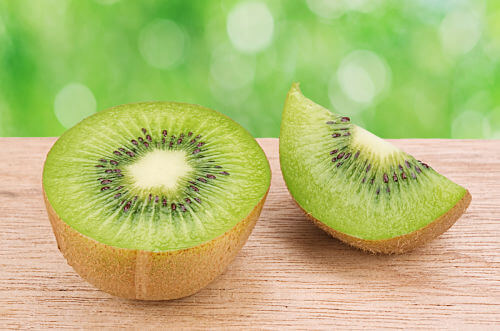
The kiwi fruit – also known as the Chinese Gooseberry – is an edible berry with a fuzzy greenish/brown skin, vibrant green flesh and lots of little black seeds.
Gold kiwi fruits, which have a smoother skin, yellow flesh and a sweeter flavour are available in some parts of the world.
They are increasingly being marketed internationally as their popularity grows, so you may be seeing them in a produce aisle near you sometime soon!
You can read more about the gold kiwi fruit here on our blog
When can baby eat kiwi?
In some parts of the world – including the UK – guidelines recommend offering your baby kiwi from 6 months of age, whereas many US sources suggest delaying the introduction of kiwi until at least 8 months of age.
We certainly wouldn’t recommend kiwi fruit as a first baby food, because it is quite acidic and might trigger a diaper rash/nappy rash, a rash around the mouth or even an upset tummy.
You should also take care with the introduction of kiwi if your baby has any allergies, or if there is a history of food allergy in your family.
Allergies to kiwi fruit are being identified more and more often as the years go by.
Experts speculate that this is because the fruit, which was only introduced to the US and Europe in the 1950s/60s, has been growing in popularity – thereby increasing the number of allergic reactions reported.
Allergic reactions to kiwi fruit tend to be linked with reactions to latex, papaya, pineapple and sesame seeds – so, if your baby is allergic to any of these, then he may well be allergic to kiwi fruit, too.
Allergic reactions to kiwi are also more common in people with allergic rhinitis (hay fever).
Symptoms of a reaction to kiwi can range from a sore mouth or swelling of the tongue/lips/face to vomiting.
Severe reactions can cause wheezing and serious breathing difficulties, requiring prompt medical attention.
If your baby suffers from reflux…
…then you may wish to wait until his first birthday – or later – before giving him kiwi.
Some parents find that its acidity can cause reflux flare ups.
On a personal level, we have always introduced kiwi once our little ones have been safely introduced to a few other fruits and veggies and their digestive systems are coping with them well.
Our youngest family member was introduced to a little kiwi fruit mashed with banana at 7 months and he absolutely adored it!
We ensured it was nice and ripe – so it wasn’t at all tart – and it he had no problems at all with digesting it (although those little black seeds made a reappearance at diaper changing time, so don’t panic if the same thing happens to you!).
As always, though, the best option is to discuss the introduction of kiwi with your chid’s doctor, who will be aware of any special circumstances that may affect when it is safe for him to eat it.
A kiwi fruit contains twice the vitamin C of an orange…
In fact, this fuzzy little fellow is packed with nutrients!
In addition to vitamin C, it provides your baby with potassium (around the same amount as a banana), vitamin A, vitamin E, calcium and folate.
Its high fibre content means that it is helpful for relieving constipation and it is a tasty source of disease-fighting antioxidants.
Eating plenty of kiwi is believed to protect the body against asthma and – in later life – lowers the fat in the blood and reduces the risk of blood clots.
Raw kiwi contains an enzyme called actinidin…
This enzyme breaks down protein – therefore it makes a useful meat tenderizer. Just squash up a ripe kiwifruit, spread it over the meat and leave for 30 minutes!
But actinidin also breaks down the proteins in gelatin – this means you can’t make jelly with fresh kiwi, because it won’t set.
The solution is to cook the kiwi first, which breaks down the enzyme.
You should also aim to serve dishes that mix kiwi and dairy immediately (kiwi stirred into yogurt, for example).
That’s because actinidin also breaks down milk proteins, leaving you with a VERY runny yogurt!
Choosing and storing kiwi for your baby
Large or small, kiwifruits taste the same and offer the same nutritional benefits.
Look for nice, firm fruits with no spots – avoid any that look shrivelled or feel too squashy.
For the maximum nutritional value – and for the sweetest flavour – serve kiwi to your baby when it’s nice and ripe.
To test it for ripeness, just press it gently with your thumb – when it’s ready to eat, it will give a little.
To ripen your kiwifruit if it’s very hard, pop it in a paper bag with a ripe banana and the ethylene gas the banana produces should soften up the kiwi fruit within a day or two.
Kiwis will last for a long time when refrigerated – sometimes as long as 4 weeks – but we recommend buying them as you need them for your baby rather than storing them for a long time.
Can my baby eat the seeds in a kiwifruit?
Yes, the seeds are very small and should not pose any choking risk – that being said you should, of course, never leave your child unattended when eating any food.
Kiwi finger food!
You can also serve kiwi slices as a finger food – we like to roll them in wheat germ to make them easier to pick up. Kiwi is also great cut into chunks, frozen, then served in a Fresh Food Feeder.
Kiwis always need peeling, right?
Actually, kiwi skin is packed with nutrients – as with most fruits and veggies, many of the vitamins and minerals reside in – or just under – the skin.
Now, we don’t suggest serving kiwi skin to younger babies – it can be quite tough and difficult to chew and could present a choking hazard.
However, for older children who are accomplished chewers, there’s a lot to be said for leaving the skins intact.
But do remove the ‘hair’ – it comes off quite easily if you give it a good rub with one of your ‘scratchy’ towels.
To peel a kiwi…
TIP: To slice ripe kiwifruit quickly and easily, use an egg slice!
Just slice off each end, then use a sharp knife to remove the skin lengthwise.
Alternatively…
Remove both ends of the fruit, then take a very thin teaspoon and insert it at one end, just between the flesh and the skin.
Twist it all the way around the outer edge of the fruit, effectively removing the skin all in one piece.
It’s tricky – but very effective once you get the hang of it!
Or…
Don’t bother peeling the kiwi at all – just cut it in half and serve it baby straight from the spoon!
Read more about the pros and cons of peeling fruits and veggies for baby here…

Kiwi baby food recipes
Creamy Kiwi Dessert
1 small kiwi, peeled and diced
4 fl oz (1/2 cup) natural yogurt (here’s how to make your own)
drop vanilla extract
- Simply mix all the ingredients together – if your baby objects to little lumps, then puree the kiwi or mash thoroughly instead.
Tempting Tropical Mash
1 small kiwi, peeled and diced
1/2 small avocado, peeled and diced
1 slice cantaloupe, peeled and diced
1/2 ripe banana, sliced
- Mash all the ingredients together for a sweet and nutritious tropical treat!
Fab and Fruity Dip
1 small kiwi, peeled and mashed
1/2 ripe peach, peeled and mashed
2 tbsp cottage cheese
- Thoroughly mix all ingredients together and serve with whole wheat toast fingers as a yummy dip, spread on bread to use as a sandwich filling, or serve from a spoon – just as it is!
Tropical Sunrise Breakfast
2oz (1/2 cup) rolled oats
6 fl oz (3/4 cup) water
2 fl oz (1/4 cup) apple juice
1 small, ripe banana, mashed
1 small kiwi, peeled and diced
4 fl oz (1/2 cup) milk (optional)
- Bring the water and juice to a boil in a saucepan.
- Add the diced kiwi and sprinkle in the rolled oats, stirring well.
- Return to the boil, then reduce the heat to a gentle simmer.
- Cook until thick (10-15 mins).
- Stir in the mashed banana and – if you require a creamier texture – the milk.
- Serve as it is – or puree in a blender if the texture is too lumpy for your baby.
Cool Kiwi Popsicles
1 large, ripe banana, sliced
1 ripe kiwi, peeled and chopped roughly
8 fl oz (1 cup) natural yogurt
pure maple syrup (optional)
- Blend the kiwi, banana and yogurt in a food processor.
- Stir in a little maple syrup if the mixture is a little too tart (if the banana used is sufficiently ripe and sweet, this probably won’t be necessary).
- Pour the mixture into a freezer-safe container and freeze until the texture is ‘mushy’.
- Take out of the freezer, beat well, then pour into popsicle moulds.
- Freeze until firm.
- Alternatively, you can freeze this mixture in an ice cube tray, then pop the cubes into a mesh feeder.
Luscious Lamb Patties with Kiwi Salsa
Perfect for babies feeding themselves and capable of biting and chewing!
For the patties
8 oz (1 cup) lean ground lamb
1-2 oz (1/2 – 1 cup) fresh whole wheat bread crumbs
1-2 fl oz (1/8 – 1/4 cup) apple juice
pinch dried rosemary leaves, crumbled
1 small garlic clove, crushed
For the salsa
1 kiwi, peeled and mashed
1 very ripe, juicy pear, peeled, cored and mashed
- Mix all the patty ingredients together until you are able to form the mixture into patties (you may need to adjust the amount of breadcrumbs/apple juice you use to get a good texture that holds together). You can make 2 larger patties or 4 little ones.
- Place the patties on a grill (broiler) pan and broil a few inches from the flame for 6 mins.
- Turn the patties over and cook for another 6 mins, until completely cooked through.
- Meanwhile, combine the mashed pear and kiwi in a separate bowl.
Serve the salsa over the patties, or on the side as a delicious dip. And do try one yourself – they’re yum!
Homemade baby food equipment…
Homemade baby food accessories