When Can My Baby Eat Strawberries?
Updated: Aug 25, 2023
It will come as no surprise to discover that the strawberry is the most popular type of berry in the world!
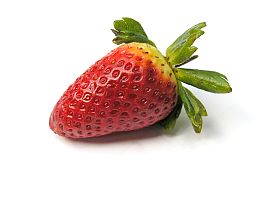
In addition to their vibrant colour, beautiful heart shape and nutritive qualities, strawberries taste absolutely delicious!
Sadly, though, there is one negative aspect to strawberries – and that’s the fact that they’re one of the foods most commonly responsible for allergic reactions.
Reactions to strawberries
Please note – this information should not be taken as medical advice and – as with all new foods – you should discuss the introduction of strawberries with your child’s doctor.
The most common reaction to strawberries is itching or a rash where the fruit comes into contact with the skin (usually around the mouth).
Occasionally, reactions to strawberries can be severe and may involve swelling of the throat.
Strawberries can also cause hives elsewhere on the body and some parents find that giving their children strawberries can cause the symptoms of asthma and eczema to worsen.
In some babies, eating strawberries can contribute to nappy/diaper rash – a reaction to the acidity in the fruit rather than an allergic response.
What causes allergic reactions to strawberries?
Despite studies into the subject, the exact reason why people react to strawberries is unclear.
Some research, however, has indicated that it may be the protein responsible for the red colour of strawberries that causes allergic reactions.
Tests showed that people allergic to regular strawberries could eat or handle white strawberries with little in the way of adverse effects.
Sadly, though, the availability of white strawberries is limited, to say the least!
So when can I introduce my baby to strawberries?
Because of the increased risk of allergic reaction, some sources suggest waiting until AT LEAST 12 months before including strawberries in the infant diet.
Guidelines do vary, though – in the UK, strawberries are often introduced somewhat earlier in the first year
And advice in the US to delay their introduction until 12 months has now been revised.
It now states that strawberries and other foods considered to be ‘highly allergic’ may now usually be given from 6 months (please see this report.)
Faced with so much conflicting advice, how do you decide what’s best for YOUR baby?
- As always, SPEAK TO YOUR CHILD’S DOCTOR.
He may be aware of certain medical factors that may play a part in influencing this decision. - Consider the fact that your baby’s risk of an allergic reaction to strawberries is higher if he has a pre-existing food allergy, or if there is a family history of food allergy.
- If your child suffers from asthma or eczema, then it makes sense to delay the introduction of any food that has been found to make the symptoms worse.
When you DO introduce strawberries to babies with these conditions, keep a food diary to help you work out if eating the fruit has any effect on their symptoms. - Do bear in mind that reactions to strawberries CAN be very serious – for that reason alone, many parents choose to wait until their little ones are at least a year old before introducing them.
If strawberries are so allergenic, why are they used in jarred baby food?
That’s a good question, because strawberries often appear in commercially prepared baby foods intended for children far younger than 12 months of age.
Here’s what the Beech Nut website has to stay on the subject…
“Fresh strawberries can sometimes cause food reactions in babies.
Cooked strawberries, on the other hand, usually do not. That’s because heat pasteurization destroys the substance responsible for reactions.
So Beech-Nut includes strawberries – pasteurized for safety and good tolerance – as one of our Beech-Nut Stage 2 ingredients.
Babies are usually ready for Beech-Nut Stage 2 at about six months.”
The fact that the processed strawberries used in commercially prepared baby food tend to be less likely to cause reactions is consistent with this research published in the Journal of Agricultural and Food Chemistry.
These studies found that anthocyanins (the plant pigments that give strawberries their colour and health benefits) are undetectable in commercially prepared baby food and that anthocyanins are only present in fresh or frozen strawberries – not processed ones!
And, as we said earlier, it appears to be the ‘colourful’ element of the strawberry that triggers allergic reactions.
Nevertheless, an absence of anthocyanins means that the strawberries in jarred baby food offer little in the way of nutrition.
Far better, then, to safely introduce fresh strawberries at an age appropriate for your baby.
Strawberries and pesticides
Strawberries are on the Environmental Working Group’s list of the 12 foods most commonly found to be high in pesticide residues.
If you choose to buy non-organic produce, then you need to take special care with strawberries – washing them thoroughly or even soaking them – to minimize the risks that pesticide residues pose to your baby.
We recommend, however, that you buy ORGANIC strawberries wherever possible.
In addition to relieving concerns over pesticides, some research has found organic produce to be far more nutritionally beneficial .
This means that your baby may receive more benefit from one organic strawberry than from 2 (or even 3) of the non-organic variety!
Good news indeed for parents of picky eaters!
Introducing strawberries to your baby – hints and tips
What makes strawberries so good for your baby?
When your baby is ready for them, strawberries provide a host of valuable nutrients
- vitamin C
- B vitamins
- vitamin K
- dietary fibre
- manganese
- folate
- potassium
- omega 3 fatty acids
- copper
- magnesium
Strawberries are also high in ‘phenols’.
These protect the body from diseases like cancer, they’re good for the heart and help support the immune system.
Selecting and storing the fruit
You need to be careful when buying strawberries, because they don’t last for long!
You might feel tempted to compensate for this by buying the fruit when it looks a little green – but this isn’t a good idea!
Strawberries don’t ripen any further once they’re picked – so you’ll be left with green, sour fruit!
Instead, look for fruit that’s plump, deep red in colour, firm, free of mould and with the little green ‘caps’ still attached.
Really large strawberries look tempting – but it’s actually the medium sized ones that taste the best.
When you get your strawberries home, check through them and discard any that are damaged – otherwise, they will contaminate the others.
We recommend dividing punnets of strawberries into two separate containers, so that they can be stored in single layers.
They spoil much more quickly when piled on top of each other.
For the best flavour, you should only keep strawberries in the refrigerator for around 2 days – so don’t buy them before you need them!
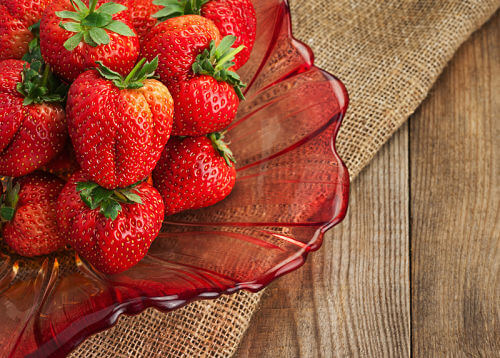
a sweet treat for your tiny diner...
How to freeze strawberries
If strawberries are only available seasonally in your area, then you may like to freeze some for future use.
Leaving the strawberries whole when freezing them preserves more valuable vitamin C than mashing, pureeing or even cutting them.
Just wash the fruit, remove the green ‘caps’ and blot the berries dry with a paper towel.
Place them on a baking sheet in a SINGLE LAYER and put them in the freezer.
Once they’re frozen, you can transfer them to a suitable freezer bag.
A change to the texture of the strawberries is unavoidable – changes in the fruit’s cells during the freezing process leave the berries somewhat ‘squashy’ when thawed.
The colour tends to darken, too, although you can minimize this by sprinkling them with lemon juice before you freeze them.
Strawberry baby food recipes and ideas
Here are some simple ideas for including strawberries in your baby’s diet…
- Serve them whole as a luscious finger food for your baby to sink his teeth (or gums!) into. Messy but yummy!
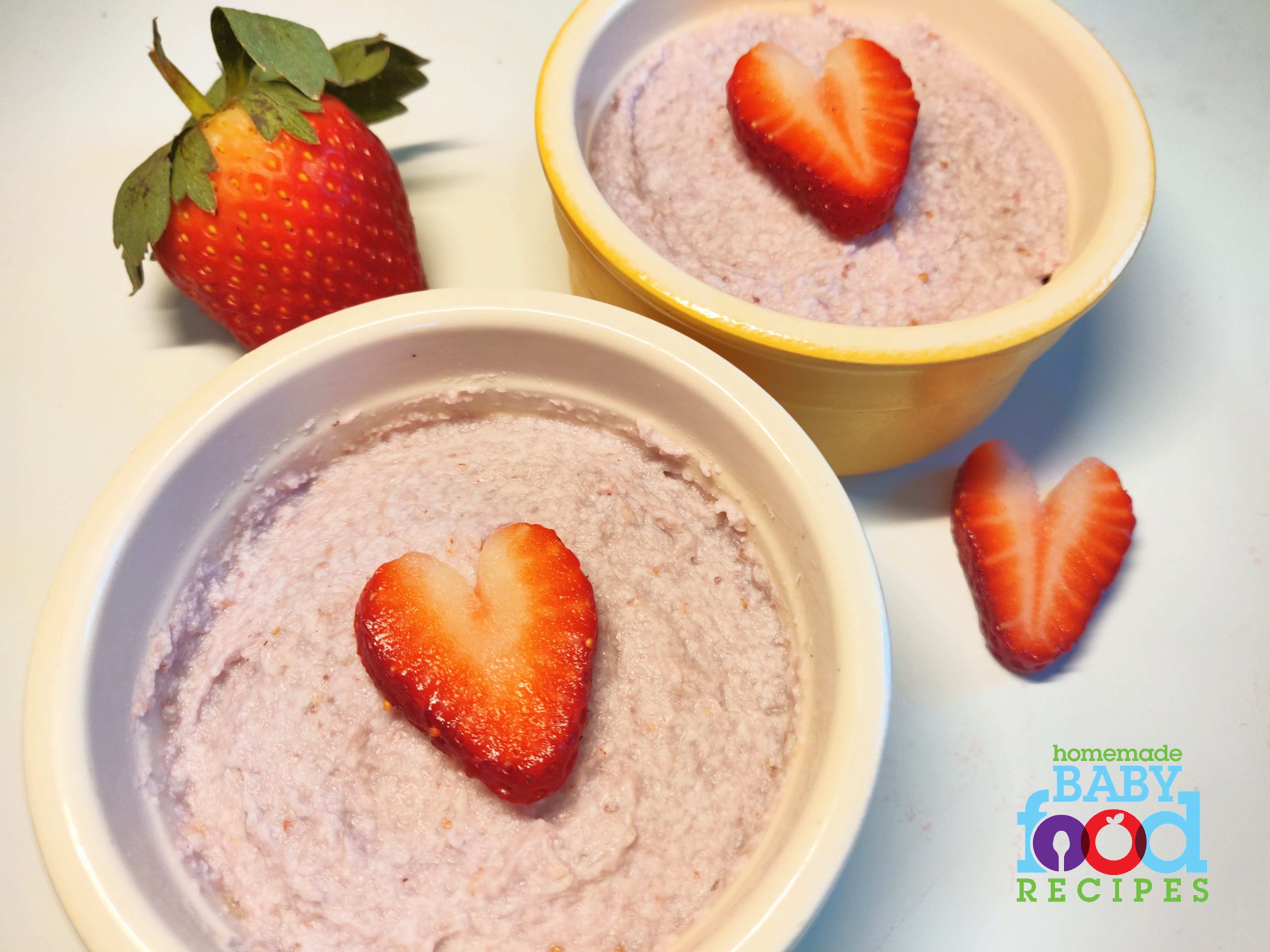
- Mash ripe, sweet strawberries with cream cheese to make a delicious spread for sandwiches, bagels or toast.
- Stir pureed strawberries into rice pudding – one of our daughters loved strawberry puree in her oatmeal!
- Mash with avocado for a fast and fruity treat.
- Combine strawberries with melon and puree in a blender – then freeze in popsicle/lolly moulds.
- Mash pureed strawberry with ripe banana – a popular combination with babies!
Strawberry fingers recipe (12 months+)
10 oz (1 1/4 cup) fresh strawberries, sliced
1 egg
4 fl oz (1/2 cup) apple juice
1/4 tsp vanilla extract
1 oz (1/8 cup) butter
8 oz (2 cups) flour
1tsp baking soda
1 tsp baking powder
- Preheat the oven to 350 deg F, 180 deg C.
- Place 4oz (1/2 cup) of the strawberries in a blender and pour in the apple juice. Blend until smooth.
- Add the egg, vanilla and butter and beat well.
- Add the flour, baking soda and baking powder and mix thoroughly.
- Add the rest of the sliced strawberries, then place the mixture in a greased baking pan.
- Bake for 20-30 mins, until golden, then cool and cut into fingers.
Creamy strawberry popsicles (12 months+ or as recommended by doctor)
1lb (2 cups) ripe, sweet strawberries
8 fl oz (1 cup) milk
- Wash the strawberries, then puree them in a blender and stir in the milk.
- Freeze in popsicle/lolly moulds – if your baby doesn’t cope well with popsicles yet, just freeze the mixture in an ice tray and serve the cubes crushed in a bowl.
Baby’s strawberry cheesecakes (12 months+ or as recommended by doctor)
1oz (1/8 cup) strawberry puree
4oz (1/2 cup) cream cheese
1/2 tsp pure vanilla extract
toasted wheat germ
- Mix the strawberry puree with the cream cheese until it is thoroughly combined.
- Put a few tablespoons of wheat-germ into a separate bowl.
- Drop the cream cheese mixture (a teaspoon at a time) into the wheat germ, rolling it into little balls.
- Chill – then serve these yummy mini cheesecakes when firm!
You may also like...

Peeling fruits and vegetables…
You may have been told that you should peel fruits and veggies for baby food – but is it always necessary?
Find out more about the pros and cons of peeling produce for your baby, plus tips for minimizing the risk to your baby from pesticide residues.
Should I Peel Fruits and Vegetables For My Baby?
To cook or not to cook…
Most baby food recipes suggest cooking fruits and vegetables – but is it OK to give them to your baby raw?
Learn more about whether cooking fruits or vegetables for baby is always necessary
More Recipes and Tips...
Avocado baby food recipes and ideas