Know Your Oats! Baby Oatmeal Recipes and Preparation Tips
Updated: Oct 15, 2023
Baby oatmeal is nutritious and a wonderful way to start baby’s day!
Here we look at how to cook oatmeal – or porridge – for your little one!
Nutrition Information
Oats – usually known as oatmeal or porridge once prepared – are one of the most nutritious grain cereals you can buy.
Unlike many other grains, which undergo extensive and damaging processing before they reach store shelves, oats are always whole.
This applies whether they are steel cut, rolled, quick cooking or instant.
This means they retain all the goodness contained in the germ, endosperm and bran… and that’s a lot of goodness!
Oats are an excellent source of soluble fibre, protein and the B vitamins thiamin, riboflavin and B6.
They also provide iron, calcium, magnesium, selenium and phosphorus.
It’s a good idea to get your children to enjoy oats from an early age, as they play a very important role in good health throughout adulthood too.
Regularly eating oats…
- Lowers the risk of developing Type 2 diabetes
- Helps guard against cancer
- Reduces the symptoms of asthma
- Lowers cholesterol and aids in the prevention of heart disease
- Boosts the body’s immune system
When can I introduce oats to my baby?
Oats are one of the least allergenic foods.
Whilst it’s important to remember that ANY food has the potential to cause an allergic reaction, oats are among the safest to introduce to your baby as a first food.
Due to their high fibre content, they do not cause constipation in the way that rice cereal often does.
Read more here about The Best First Food For Baby and why rice cereal may not be the most suitable choice for your little one).
Of course, you should always discuss the introduction of any new foods with your child’s doctor – particularly if you plan to include them before your baby is 6 months old.
Oats and gluten
Before 6 months of age, babies should not be given foods containing gluten, as this is believed to raise the risk of their developing Coeliac (Celiac) disease (more information here).
But whether or not oats are considered a ‘gluten containing’ grain is the subject of some speculation.
Oats do contain a little of the glutenin and gliadin that make up gluten and which are associated with the potential development of Celiac disease.
There is also an issue of cross-contamination, where oats may be contaminated by other gluten-containing grains with which they are grown, harvested, processed or stored.
However, most people with Celiac disease seem to tolerate oats very well.
Indeed, pure oat products in certain parts of the world, particularly Scandinavian countries, are marketed as being an acceptable part of a gluten-free diet.
Nevertheless, it is still wise to consult your doctor if you plan to introduce oats to a child with a family history of gluten intolerance.
Types of oats
When oats are harvested, they have a tough, inedible hull which has to be removed before cooking.
Once the hull is removed, you are left with the delightfully named oat groats.
Oat groats take a LONG time to cook (around 50 mins) and need to be cooked in more water than ‘regular’ oats (three parts water to one part groats).
They have a lovely chewy texture… but probably a little too much texture for your baby to enjoy!
When the groats are cut into 2 or 3 pieces, they are known as steel cut oats.
Steel cut oats come in various thicknesses and generally have a hearty texture.
They take longer to cook than ‘regular’ oats – around 30 mins – but generally require less water in preparation than oat groats (only 2 parts water to 1 part steel cut oats).
Sometimes, oat groats are steamed then passed through rollers, giving you rolled oats or old-fashioned oats.
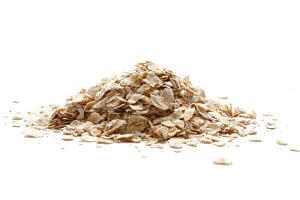
Rolled oats vary in size and thickness and are sometimes flaked before rolling.
Regular rolled oats take around 15 mins to cook, whereas thinner flakes or ‘Quick Oats’ may cook in as little as five.
Rolled oats generally require 1 part oats to 2 parts water in preparation (although instructions are usually provided on the packaging).
Instant oats are cut fine and rolled extremely thinly.
They simply require the addition of boiling water – but, although still a whole grain product, tend to be less nutritious because they have usually had sugar, salt or other flavourings added to them.
Whenever you buy any oat products for your baby, you need to make sure that the only ingredients listed on the label are oats, or rolled oats.
Buying and storing oats
Oats tend to go rancid more quickly than other grains – so buying them in very large quantities is not a good idea.
You should store your oats in an airtight container, in a dark, cool place for around 2 months in order to maintain their freshness.
How to serve oats to your baby
It’s very easy to grind your own oats to make baby oatmeal (porridge) with the smooth texture he enjoys (special, commercially produced baby oatmeal or infant oatmeal is not essential!).
Oats may be ground in a coffee grinder or even a regular food processor (this Spice and Coffee Grinder is great as it’s relatively inexpensive and will efficiently grind grains, spices and coffee).Another option is to prepare oatmeal in the usual way, then puree it afterwards!
Basic Homemade Baby Oatmeal Recipe
1oz (1/4 cup) rolled oats
8 fl oz (1 cup) water
- Pour the water into a small saucepan and bring to the boil.
- In the meantime, grind your oats until they resemble a fine powder.
- Gradually whisk them into the boiling water, then lower the heat and simmer gently for 10 mins, stirring often to prevent sticking and clumping.
- Cool and serve.
Here are our tips to help you and your baby get the most from oats!
- Finely ground oats make a super-healthy thickener for soups, overly-runny purees and sauces.
- Oats may be served raw – so try grinding them and mixing them into healthy baby smoothies or purees.
When our babies were around 14 months old, they loved eating raw rolled oats as a finger food – picking them up one by one took forever but it certainly made a healthy way of keeping them occupied!
Please use your discretion if you choose to offer oats to your child in this way as they could present a choking hazard if your baby isn’t ready for them. - Save time in the mornings by cooking your oats the night before and warming them up at breakfast time.
Alternatively, cook several days’ supply in one go and store it in the refrigerator, warming portions as needed. You can even freeze prepared oatmeal. - When baking muffins or bread, throw in a handful of oats for texture and goodness (instant oats, however, are not suitable for baking).
- Try cooking oats with half milk/half water – or all milk. Our little ones have always preferred them this way.
- Soak your oats! Not only does this speed up the cooking time, it offers additional health benefits too.
Oat baby food recipes
Apple and sultana baby oatmeal (6 months+)
2oz (1/2 cup) rolled oats
6 fl oz (3/4 cup) water
2 fl oz (1/4 cup) apple juice
1 naturally sweet apple, peeled, cored and diced
pinch nutmeg
1 tbsp sultanas
4 fl oz (1/2 cup) milk
- Pour the water and juice into a saucepan and bring to the boil.
- Add the diced apple and sultanas, then sprinkle in the rolled oats, stirring well.
- Return the mixture to the boil, then reduce the heat to a gentle simmer.
- Add the nutmeg and cook until thick (10-15 mins).
- Before serving, stir in the milk.
If this recipe is too lumpy for your baby, you can puree it directly in the pot using a hand blender. Another alternative is to soak the sultanas to soften them, then puree them before adding them to the dish.
Baby oatmeal and veggie combo (6 months+)
Once your baby is enjoying single ingredient vegetable purees, try this tasty and satisfying recipe which uses oats to meet his ‘growing’ appetite!
1 leek, chopped
1 medium carrot, peeled and cubed
1 medium parsnip, peeled and cubed
8oz (1 cup) broccoli florets
3 tbsp regular oatmeal (porridge oats)
- To prepare the leek, remove the tough and fibrous root end and take off the thick outer leaves.
- Trim the rest of the leaves.
- Cut the leek in half lengthwise and wash both halves thoroughly by ‘swishing’ them around in a bowl of water.
- Chop the leek finely, using the white AND the green parts.
- Put all of the ingredients (including the oatmeal) into a saucepan and JUST COVER with water.
- Bring the mixture to a boil.
- Quickly reduce the heat and simmer gently for around 10-15 minutes, until all the vegetables are fork tender.
- Place in a food processor and puree until smooth.
- For an added burst of flavour, stir in a couple of teaspoons of freshly chopped herbs (chives or parsley are yummy).
- Serve to baby and freeze any leftovers immediately.
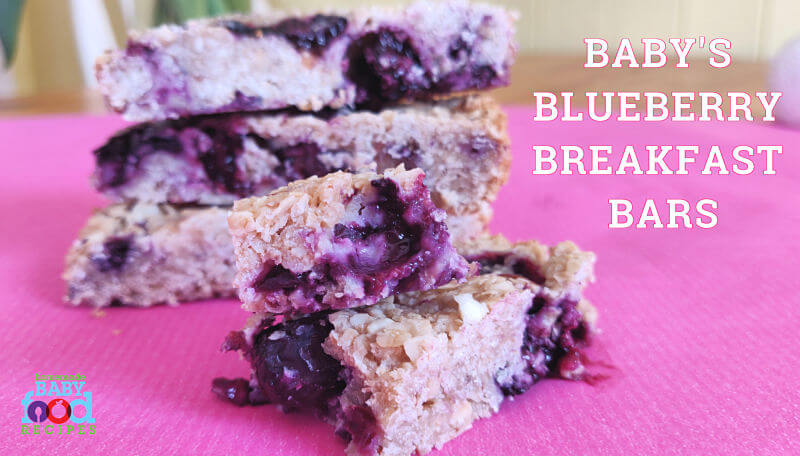
Baby oatmeal and banana bars
This easy recipe, sent in by a visitor to our site, produces chewy oatmeal bars for babies coping well with finger foods.
1 ripe banana
handful of oats
- Preheat the oven to 350 deg F (180 deg C).
- Mash the banana thoroughly.
- Grind the oats in a food processor.
- Combine the banana with enough ground oats to form a sticky dough.
- Divide the mixture into small pieces and press it into the shapes of your choice (we make simple bars).
- Bake for around 10-15 minutes until golden brown in colour – they become harder the longer they are cooked, so keep the baking time as brief as possible if you wish to retain a chewy texture.
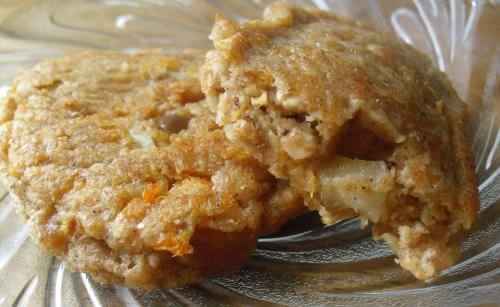
Baby oatmeal and apple cookies
These cookies are suitable for older babies coping well with finger foods.
2oz (1/2 cup) flour
2oz (1/2 cup) rolled oats
2oz (1/4 cup) raisins
1tsp nutmeg
1tsp cinnamon
1/2 tsp baking soda
pinch salt
2 fl oz (1/4 cup) vegetable oil
4oz (1/2 cup) applesauce (try using our sugar free applesauce recipe)
1 egg (large)
- Pre heat the oven to 375 deg F (180 deg C).
- Take two separate bowls – mix the dry ingredients in one and the wet in another.
- Mix the contents of the two bowls together, then use a dessert spoon to place separate ‘blobs’ on to a greased baking sheet.
- Pop into the oven and bake until firm.
Sugar Free and Made with Healthy Whole Grains

Visit our blog to find out What To Do With Leftover Oatmeal!
Source:
Quaker Oats – Family Nutrition