Vitamin C
Tips for preparing homemade baby food that’s as healthy as can be!
Vitamin C is essential for your baby’s healthy growth and development. It is used in a multitude of functions throughout the body, including the growth of tissues, healing after wounds and protection against the common cold!
It’s also an important anti-oxidant, which means that it helps protect the body against diseases like cancer, heart disease and arthritis.
What’s more, vitamin C helps your baby effectively absorb iron and calcium from his food.
This is why it’s a good idea to offer a piece of fruit with every meal!
A deficiency of vitamin C – which is actually rare in the developed world – can lead to a condition called scurvy, the symptoms of which include pain in the joints, fatigue, bleeding or inflamed gums and – in babies – problems with growth.
History tells us that British sailors would often develop scurvy as they had few fruits or vegetables in their diets during long voyages.
The connection between a lack of fresh produce and the development of scurvy was noted by Dr. James Lind in 1747, so ships later began sailing with an added cargo of limes to keep the sailors’ vitamin C levels topped up.
That’s why the British are sometimes referred to as ‘Limeys’ to this day!
How much vitamin C does my baby need?
Unlike many other mammals, humans are unable to make their own vitamin C. We need to obtain a continuous supply from our diets – our body’s inability to store vitamin C means that our levels can easily run low.
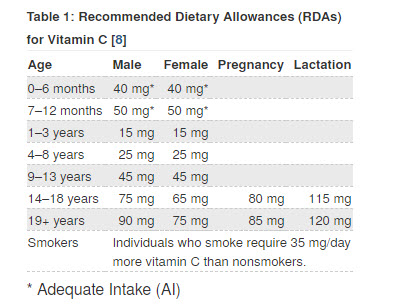
For much of baby’s first year, his vitamin C requirements are met by his milk, but as solids begin to take over as his main source of nutrition, then he should eat foods containing vitamin C on a daily basis. A regular, balanced diet is all he needs to reach his RDA (Recommended Dietary Allowance) of vitamin C.
An important point to remember is that – because the body cannot store vitamin C – there is no merit in offering large quantities of foods rich in vitamin C all in one go. Instead, you should aim to offer your little one small amounts of vitamin C rich foods on a regular basis.
The following information is from the National Institutes of Health, showing the Recommended Dietary Allowance (RDA) for Vitamin C for infants and young children…
Does my baby need a vitamin C supplement?
Nothing beats fresh fruit and vegetables as a source of bio-available (easily absorbed) vitamin C.
Once solids become your little one’s primary nutrition source, offering him a healthy, balanced diet with lots of veggies and fruit should meet all his vitamin C requirements, without the need for additional, synthetic vitamins.
However, you should always discuss your baby’s dietary needs with a medical professional, since there may be other factors affecting his vitamin requirements.
For example, some pediatricians will recommend a vitamin supplement for a baby who was born prematurely, or for a baby with a medical condition.
Vitamin supplementation may also be required for older babies who are ‘picky eaters’ – possibly refusing fruits and vegetables and no longer consuming enough breast milk or formula to support their needs.
Of course, the best way to avoid this situation is to introduce your little one to a broad range of fruits and vegetables from the outset, thereby establishing a healthy eating pattern and helping baby develop a sophisticated palate.
Here are some helpful tips to encourage your little one to eat his veggies
Please remember – you should only give a vitamin C supplement to your child under the supervision of your doctor or other medical professional.

Sources of vitamin C
All fruits and veggies contain vitamin C, but some are better than others!
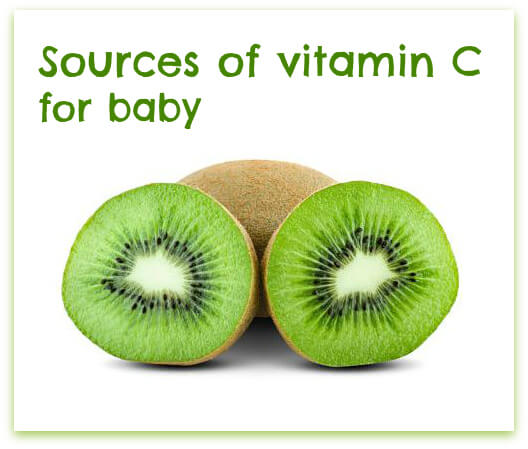
Here are two groups of foods – the first list contains the best sources of vitamin C and the second list shows other foods that have a slightly lower vitamin C content but that are still useful sources. Some parents choose to avoid or delay the introduction of those marked with an asterisk (*) until after baby’s first birthday…
The best sources of vitamin C…
- bell peppers (particularly green ones)
- citrus fruits*
- kiwi fruit*
- tomatoes*
- broccoli
- leafy greens
- potatoes (sweet or white)
- cantaloupe
- parsley
Other useful sources of vitamin C…
- blueberries
- pineapple*
- winter squash
- raspberries*
- cranberries*
- papaya
- watermelon
- mango
- Brussels sprouts
- cauliflower
- cabbage
- turnips
- zucchini/courgettes
Remember – the vitamin C in whole fruit is far better absorbed by your baby than the vitamin C in fruit juice, plus it gives him more fibre, too!
Other products labelled as being ‘fortified with vitamin C’ are no substitute for fresh fruit and veggies!
Does cooking affects the vitamin C levels in food?
Vitamin C is water soluble – in other words, it dissolves in water. It is also sensitive to light and to heat.
In order to preserve as much vitamin C as possible in the foods you serve your baby, here are some simple guidelines to follow…
- Try to ensure that the fruits and veggies you buy for your baby are truly fresh. Produce that has been sitting on store shelves for days on end will have lost some of its vitamin C content. Buying local produce – particularly from farmers’ markets – is ideal, because you know that it has not been transported a long distance. If you only have access to fruits and veggies that are clearly NOT as fresh as they should be, then frozen or even canned produce may be preferable. Even though some vitamin C is lost during processing, it may still be less than the amount lost by extended exposure to light and heat.
- Look for ripe produce – or allow it to ripen – before serving to baby. Fully ripe fruits and vegetables contain more vitamin C than unripe.
- Store your fruits and veggies in a cold, dark place (preferably the fridge!) to minimize vitamin C loss.
- Serve fruits and vegetables to your baby raw whenever possible. This doesn’t apply to all produce, of course, and may not be appropriate for all babies, depending on their age, stage of development and sensitivities (see this page for more information).
- If it’s possible, try to make baby’s food and serve it to him on the same day, as the freezing and subsequent thawing of baby food does contribute to vitamin loss. However, a parent’s life is a busy one… and making batches of homemade baby food for the freezer is still preferable to buying commercial baby food, which has undergone infinitely more processing!
- Try making baby food with unpeeled fruits and vegetables, as most of the nutrients are stored in – or just under – the skin. Again, there are situations where this may not be appropriate (see this page – Should I Peel Fruits and Vegetables for My Baby?)
- Cook fruits and vegetables for the shortest time possible, until they are ‘just done’ rather than mushy. Overcooking is the quickest way to destroy their vitamin C content!
- Try steaming fruits and vegetables rather than boiling them, as less vitamin C is lost this way. Research has also shown that cooking in the microwave keeps in even more vitamins than steaming, although many parents still prefer not to microwave their babies’ food.
- If you DO boil fruits and vegetables for your baby, add the cooking water back into the food whenever possible. This makes use of the vitamin C that has dissolved – or ‘leached’ – into the water.
- Avoid cooking your fruits and veggies in copper pots – this is believed to destroy their vitamin C content.
- Have you ever been told that adding baking soda to your veggies as they’re boiling will help retain their bright colour? It will also cause nutrient loss – so don’t do it! Vegetables cooked for as short a time as possible should still look bright anyway!
Sources:
Linus Pauling Institute – Vitamin C
Other links you may find useful…
Iron supplements for infants – are they necessary?