Mushrooms Baby Food Recipes and Ideas
Updated: Sept 08, 2023
Everyone knows that brightly coloured fruits and vegetables are good for you – but what about drab-looking mushrooms?
Do they offer anything to the diet aside from flavour – and are they safe for baby to eat?
This page looks at the merits of consuming mushrooms – and explains why we recommend never serving them raw.
The nutritional value of mushrooms
A mushroom is neither a fruit nor a vegetable – it’s actually an edible fungus!
In some parts of the world – and in Eastern cultures in particular – mushrooms are believed to have significant health benefits, whilst in the western world they have traditionally been viewed as being of little nutritional value.
However, a different story is slowly emerging, as their benefits are being more closely investigated.
Most species of mushroom contain B vitamins, vitamin C, protein, iron, potassium, selenium and other minerals.
They are also particularly rich sources of compounds known as beta-glucans, which help support the immune system and protect the body from disease – plus an important antioxidant called ergothioneine.
Perhaps most interesting of all is the fact that mushrooms are the ONLY non-animal source of vitamin D, the ‘sunshine vitamin’ in which so many children are deficient.
Mushrooms actually convert sunlight to vitamin D in the same way that we humans do in our skin.
What’s more, the vitamin D content of mushrooms is stable, which means that it isn’t significantly reduced by cooking.
Techniques are now being employed to make mushrooms an even BETTER source of vitamin D in future, by boosting their exposure to UV light.
Mushroom varieties
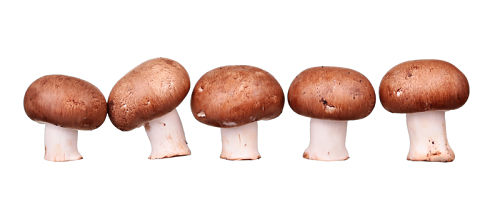
In the western world, white button or crimini mushrooms are the most commonly consumed.
Portabella (or portobello) mushrooms are also a great favourite and their ‘meaty’ texture makes them popular in vegetarian diets.
Placed in a sandwich they are often eaten instead of a regular ‘beef’ burger.
Portabella mushrooms, however, are not a separate ‘species’… they are actually fully grown crimini mushrooms!
More exotic types of mushrooms, such as shiitake, maitake and oyster, are growing in popularity thanks to their rich flavours and perceived health benefits.
That being said, research suggests that the common button mushrooms are at least comparable to the more exotic varieties in terms of nutritional value and – in some cases – even surpass them!
Why you should NEVER serve mushrooms raw
Serving mushrooms raw, sliced and sprinkled over a salad for example, is often portrayed as a healthy option.
Yet there is evidence suggesting that mushrooms should NOT be eaten raw – either by your baby or by other family members.
- The cell walls of mushrooms are made of mycochitin – a substance that is very difficult for the human body to digest.
Cooking mushrooms breaks down the mycochitin, not only making them easier to digest, but also releasing the nutrients for absorption by the body. - There is a risk of bacterial contamination from raw mushrooms – particularly when you consider that they are sometimes grown on manure!
- Cooking mushrooms helps destroy components that may lead to irritation or allergic reactions.
- Raw mushrooms – including white button/crimini mushrooms – contain potentially carcinogenic compounds called hydrazines.
Much of the hydrazine content of mushrooms is believed to be destroyed by thoroughly cooking them.
Sources:
Hepatocarcinogenesis by hydrazine mycotoxins of edible mushrooms
When can my baby eat mushrooms?
Mushrooms are NOT on the list of ‘high risk’ foods in terms of their potential to trigger an allergic reaction.
Although mushroom allergy has not been extensively researched, it is thought to be relatively rare (source: Mushroom Allergy).
Allergic reactions to mushrooms tend to occur within 30 minutes after consumption and include itching, hives, swelling of the lips/tongue/throat, dizziness and upset tummy.
Occasionally, an allergy to mushrooms can cause breathing difficulties – sometimes severe.
ALWAYS consult your doctor should you suspect that your child is experiencing an allergic reaction to any food.
Mushrooms are not generally considered to be an ideal first food for baby, though, principally because they are rarely served alone and are better mixed into other dishes.
Given that the risk of allergic reaction is low, you may – with your doctor’s consent – include well cooked mushrooms in your baby food recipes once your little one is already enjoying a variety of the more usual ‘first foods’.
This is typically from around 7-8 months of age.
Due to their soft texture, they are generally easy for babies to eat when chopped and do not necessarily need pureeing.
Choosing and storing mushrooms
Fresh mushrooms should be light in colour, with a plump, firm texture.
Mushrooms that are ‘past their best’ tend to be darker in colour and may look withered or feel slimy – these should be avoided.
Wrapped in a damp paper towel, fresh mushrooms will keep in the refrigerator for up to a week.
Cleaning and preparing mushrooms
Mushrooms can be a little awkward to clean, as they soak up water and can get very soggy.
Mushroom connoisseurs will tell you to clean them with a mushroom brush and NO water, although we tend to trim the stems, PEEL them (yes, it can be done and is actually very easy!), then give them a quick rinse before cooking.
If you don’t want to peel them, try wiping them clean with a damp paper towel.
Note: Mushroom stems are edible, but are easy to remove if you don’t want to use them.
You can then pop them into a homemade stock/broth for a little extra flavour!
The stems of shiitake mushrooms, however, can be very tough and are usually best removed before cooking.
Mushrooms baby food recipes
Properly cooked mushrooms make a tasty addition to your baby food recipes.
They add a nice boost of flavour when cooked in pasta sauces and are great roasted alongside other nutritious veggies!
Portabellas make a healthy alternative to regular burgers and are a great replacement for meat in many recipes, both in terms of flavour and texture.
They are also delicious in omelets, although we recommend cooking them separately THEN adding them to the eggs.
This is to ensure that they are thoroughly cooked, rather than very lightly cooked as the mushrooms in omelets tend to be!

Roasted Mixed Mushroom and Veggies
12 button mushrooms
4 shiitake mushrooms
2 medium sweet potatoes
1/2 onion
1 garlic clove
2 tsp dried rosemary
1 tbsp olive oil
2 fl oz (1/4 cup) chicken stock
- Preheat the oven to 425 deg F (220 deg C).
- Clean the mushrooms and remove the shiitake stems.
- Peel the sweet potato and cut into slices. Roughly chop the onion and peel the garlic.
- Toss all the ingredients in a bowl with the oil and rosemary, then empty into a roasting pan. Ensure that all the veggies and mushrooms are in a single layer.
- Roast for around 30 minutes, until all the veggies are tender, giving the pan a shake from time to time.
- Put the potato slices, onion and garlic into a blender and add the chicken stock. Blend until smooth.
- Chop the mushrooms and stir into the richly flavoured pureed sweet potato – simply delicious!
Stuffed Baby Buttons
These little mushrooms make a tasty (but messy) finger food for older babies.
6 large button mushrooms
1 tbsp olive oil
1 small, roasted red bell pepper, chopped
1/2 tsp garlic, crushed
1 tbsp chicken stock
2 tbsp Cheddar cheese, grated
1 tbsp dry breadcrumbs
- Preheat the oven to 375 deg F (180 deg C).
- Remove the mushroom stems, set them aside and brush the caps with olive oil. Turn the mushrooms over and place them on a baking tray.
- Chop the stems.
- Heat a little olive oil in a small frying pan/skillet and saute the mushroom stems with the chopped red pepper and garlic until the stems are tender.
- Stir in the chicken stock, cook for 2 mins more, then remove from the heat and transfer the mixture to a small bowl.
- Stir in the cheese and breadcrumbs, then pack the mixture into the mushroom caps.
- Bake for 20 mins, then cool and serve.
Easy Cheesy Portabella Caps
Another finger food that’s takes just minutes to prepare but is full of mouthwatering flavour!
1 portabella mushroom
1 tsp olive oil
pinch freshly ground black pepper
1 heaped tbsp Cheddar cheese, grated
1 tbsp chopped fresh chives
- Preheat the oven to 450 deg F (230 deg C).
- Brush the mushroom cap with olive oil, then place – cap side down – on a lightly greased baking sheet.
- Sprinkle with the pepper, then top with the grated cheese.
- Bake for 15-20 minutes, until the cheese has melted and the mushroom is tender and cooked through.
- Sprinkle with chives, then cut into baby sized wedges, cool and serve!
More articles and recipes…
Creative vegetarian baby food recipes